Plant to Pad Blueprint – Development of an internationally applicable blueprint for the production of plastic waste-avoiding, biodegradable menstrual hygiene products made from plant fibres with the creation of ecologically and socially useful work against social stigmatization
Keywords: gender equality, environmental technology, resource conservation
Subject and objectives of the project
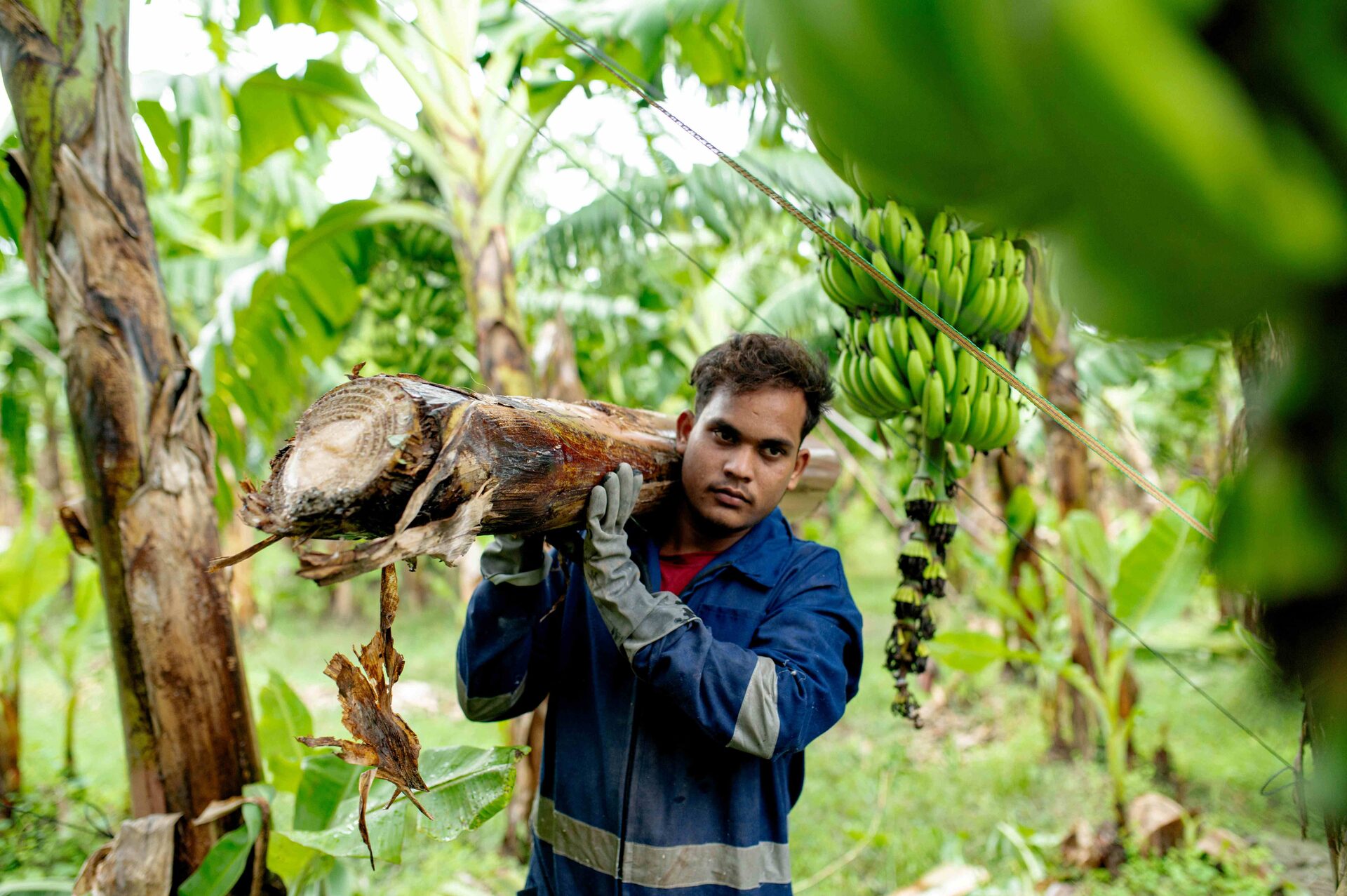
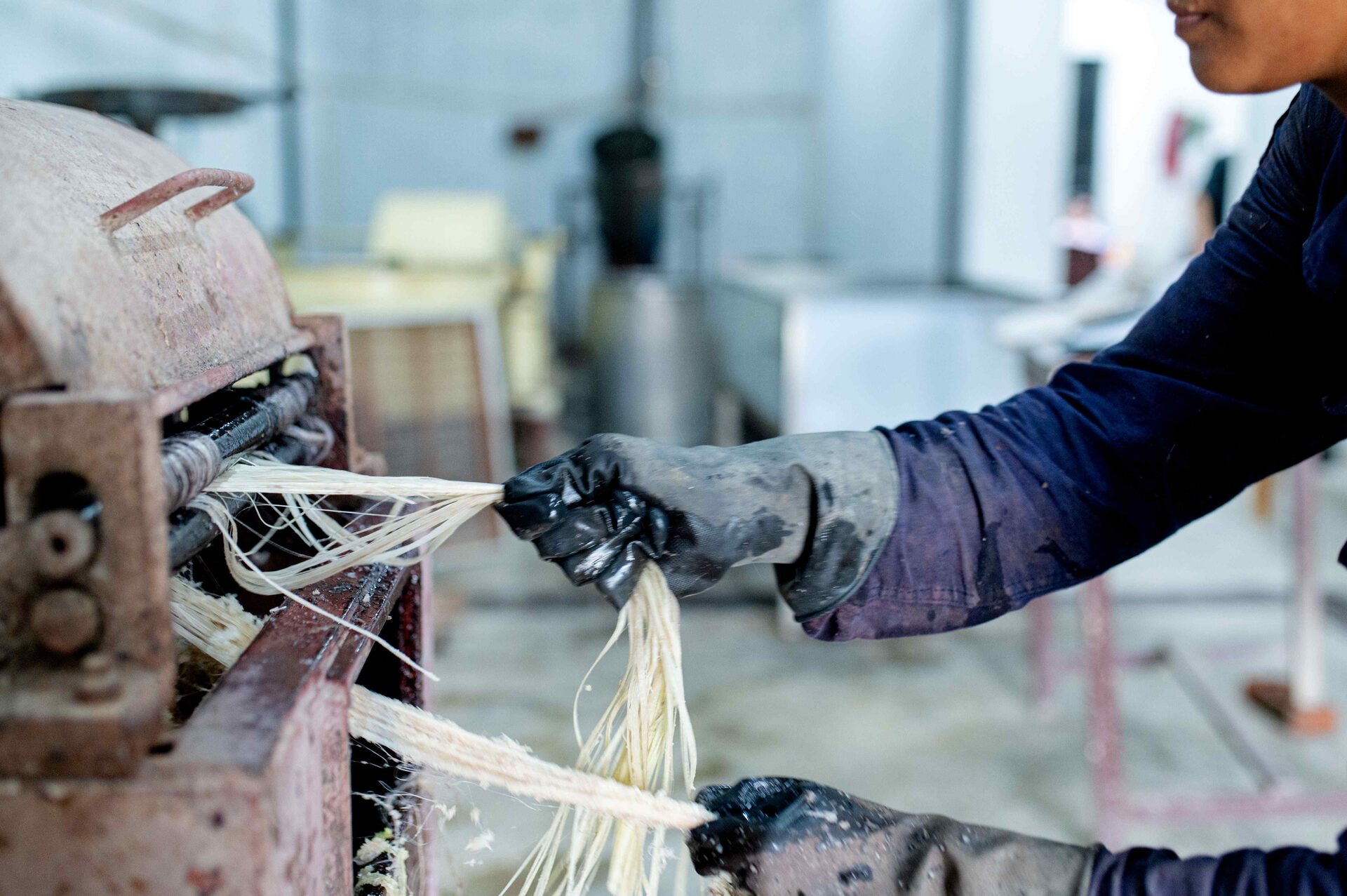
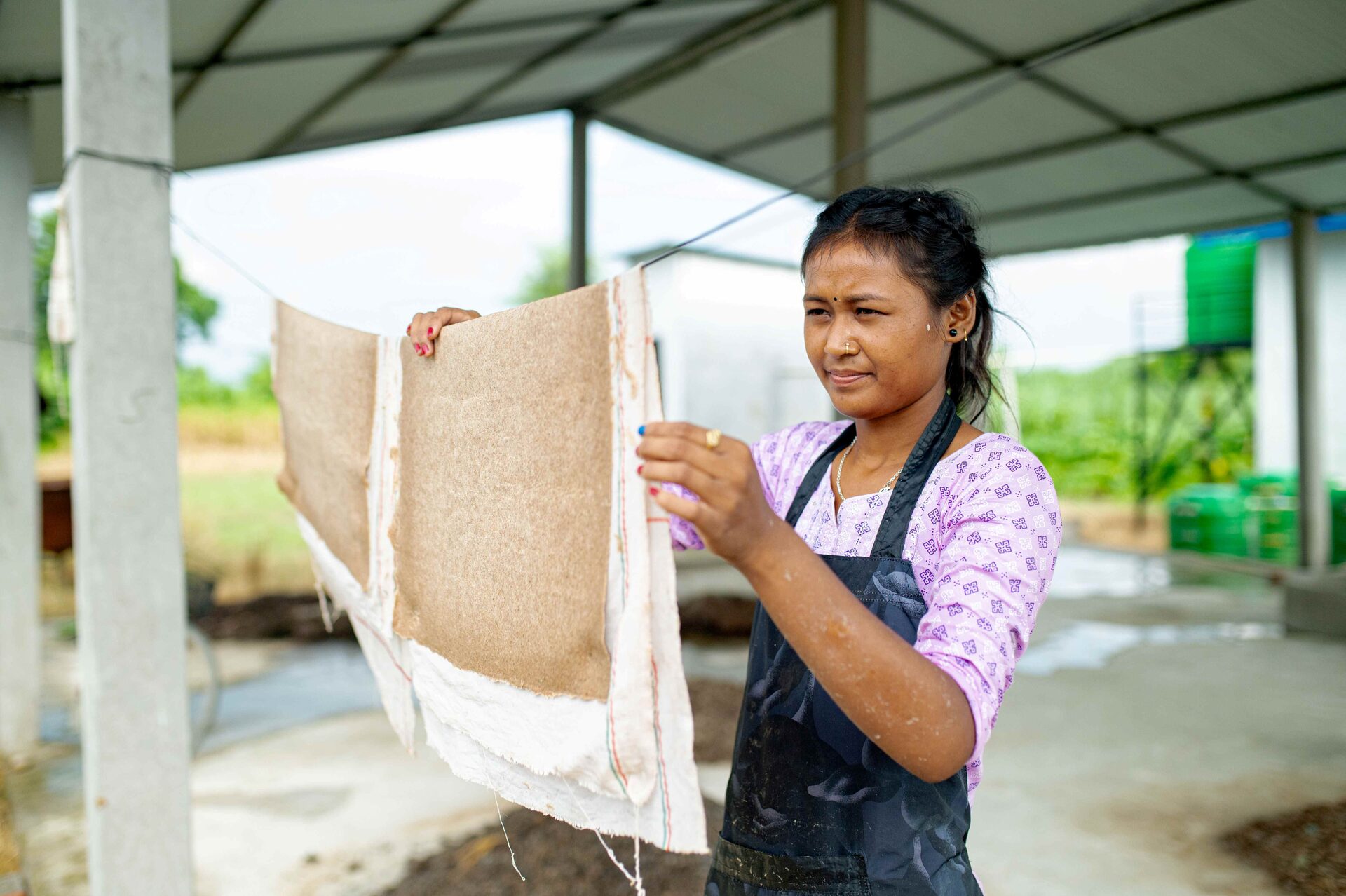
Menstrual poverty refers to the situation in which menstruating people do not have sufficient access to hygiene products such as tampons, pads, etc. because they are too expensive or not available. It affects more than 500 million women in almost all regions of the world, but particularly in countries with high poverty rates, poor infrastructure and relevant resentment. In Nepal, the NIDISI association is tackling this problem with a biodegradable sanitary napkin made from a renewable resource, namely the fibers from the otherwise unused stalk of the banana tree. Together with Sparśa, a Nepalese social enterprise, NIDISI has developed the production technology for sanitary towels locally and established the corresponding distribution infrastructure. In this project, NIDISI Germany is developing a “blueprint” based on the successful implementation in Nepal. This means that the know-how about technology, operation, raw materials, etc. is systematically processed and shared internationally on the UNDP’s “Panorama” dissemination platform, which is very well suited for this purpose. This blueprint provides knowledge that enables small and medium-sized enterprises (SMEs) in banana-growing regions around the world to set up production facilities with a minimum capacity of 3,000 compostable pads per day. This knowledge enables them to apply and further develop the technical process. In Kenya, the blueprint is to be validated by setting up a corresponding production facility. In addition to the social effect, the ecological impact will include the avoidance of plastic waste.
Innovation and exemplary nature of the project
The project is implemented by the core partner NIDISI gGmbH, Berlin. NIDISI Nepal and Ziada Solution (Kenya) are associated project partners. Ziada Solution is the first replicator for the Plant-to-Pad Blueprint and will set up a production facility in Taita Taveta County, i.e. replicate machines and incorporate the feedback from the tests into the further development of the Blueprint. This will allow initial assumptions about the replicability of the blueprint to be tested in a different cultural and geographical context. With its existing infrastructure, experience in fiber processing and close cooperation with NIDISI, Ziada Solution has all the prerequisites to successfully test and further develop the concept. In the long term, a “plant-to-pad” community structure is to grow and be extended to other fiber types such as water hyacinth, sisal and bamboo. Their openness to knowledge transfer and community building makes them a strong partner for the long-term scaling of the project.
Funding topic 7: Resource-efficient processes, production processes and materials
Project implementation:
Associated partners:
- Sparśa Nepa, Non-Profit Company (NPC), Bharatpur, Nepal
- NIDISI Nepal, Non-Profit Organization (NPO), Gaind-akot, Nepal
- Ziada Solution LLC, Taveta Nairobi, Kenya
- PANORAMA Platform – Solutions for a Healthy Planet
Places of work: Germany, Nepal, Kenya and Nigeria
Funding period: August 2025 to August 2027
Project costs: Total volume: 105,743 euros, funding from DBU: 105,743 euros
DBU-AZ: 40464/01
Status: 09.02.2026