MadaCookClean – Development and establishment of innovative biopellet production in Madagascar for use in low-emission, efficient cooking stoves, producing biochar for soil improvement
Keywords: environmental technology, environmental research, climate protection, resource conservation, citizen energy
Subject and objectives of the project
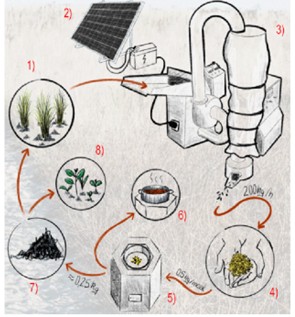
The project includes a holistic citizen energy approach. It addresses the problem of deforestation, soil erosion and the health aspects of cooking methods. The basis for this is a deforestation-free supply chain that involves the rural population and local authorities. An energy self-sufficient production of biomass pellets is being established, which in turn are charred in simple but energy-efficient pyrolysis ovens. This produces both the heat required for low-emission cooking and biochar, which is suitable as a permanent soil conditioner. The demonstration plant, its functional principle, the right plant and component design and initial on-site experience in the production of high-quality pellets are already available.
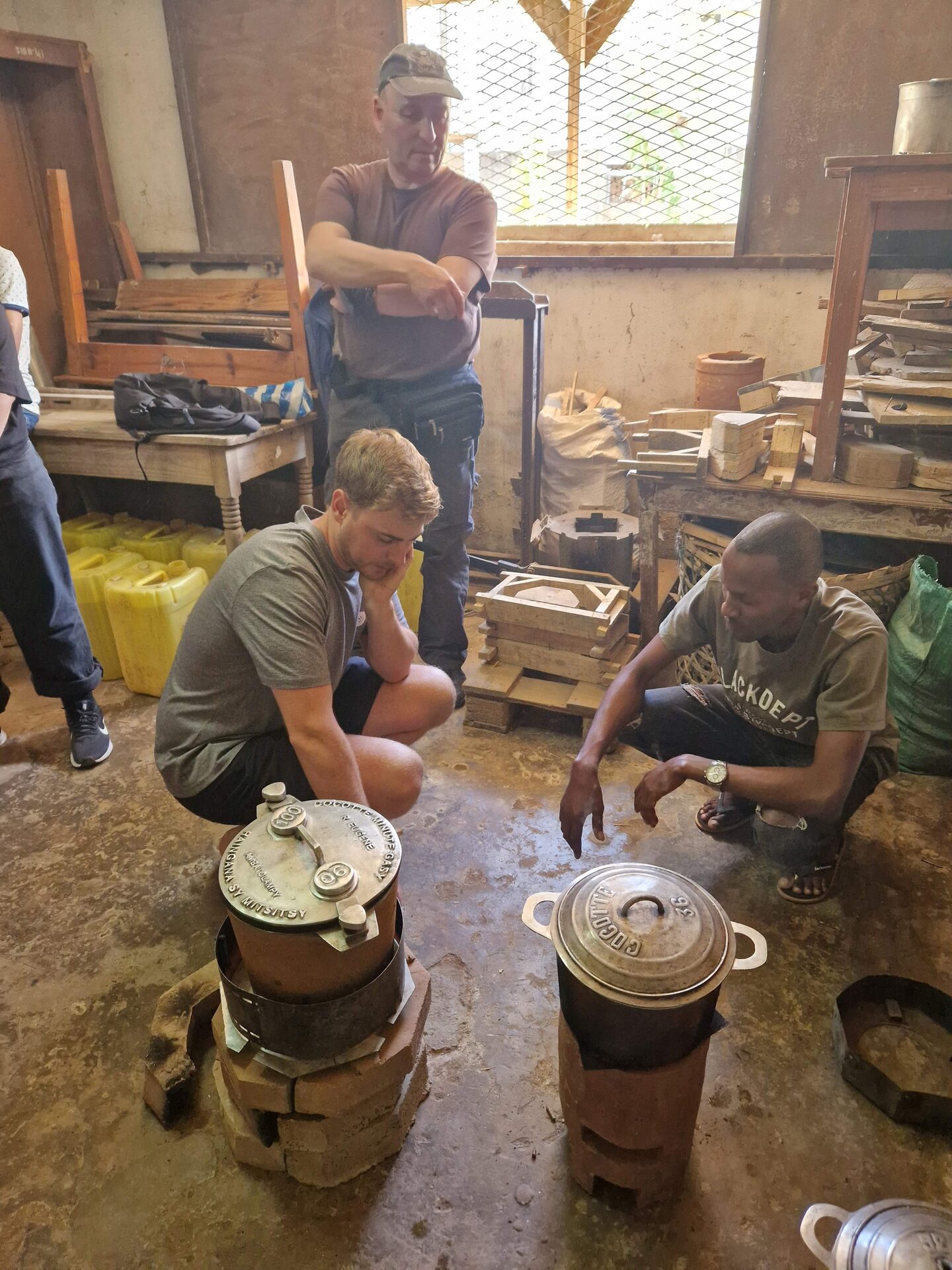
The project implemented here organizes and optimizes the logistics for the biomass by mapping the biomass in the Sakaraha area, then builds a pellet production facility near Ihosy and puts it into operation. Decentralized stove production is organized for six villages and disseminated in an awareness-raising campaign on sustainable agriculture with various organizations, e.g. by women for women and in the smallholder sector. With the involvement of the authorities, a receipt system is being introduced to make cash flows and the supply chain traceable. Smallholder farmers as stakeholders, especially women, learn how to produce energy-saving, low-emission stoves themselves from regional resources and use them efficiently. The project objectives are implemented locally in close cooperation and coordination with the project partner AJPER, which is intensively involved in raising awareness and building stoves in the Fianarantsoa region. The project partners are thus bringing together a broad spectrum of innovative technologies and initiatives.
The project has the following objectives in mind:
- Mapping of biomass deposits in the vicinity of the first pellet production and optimization of the existing supply chain through the establishment and training of women’s initiatives in the field of the biomass circular economy
- Construction and commissioning of the second pellet production facility with optimized energy supply near Ihosy
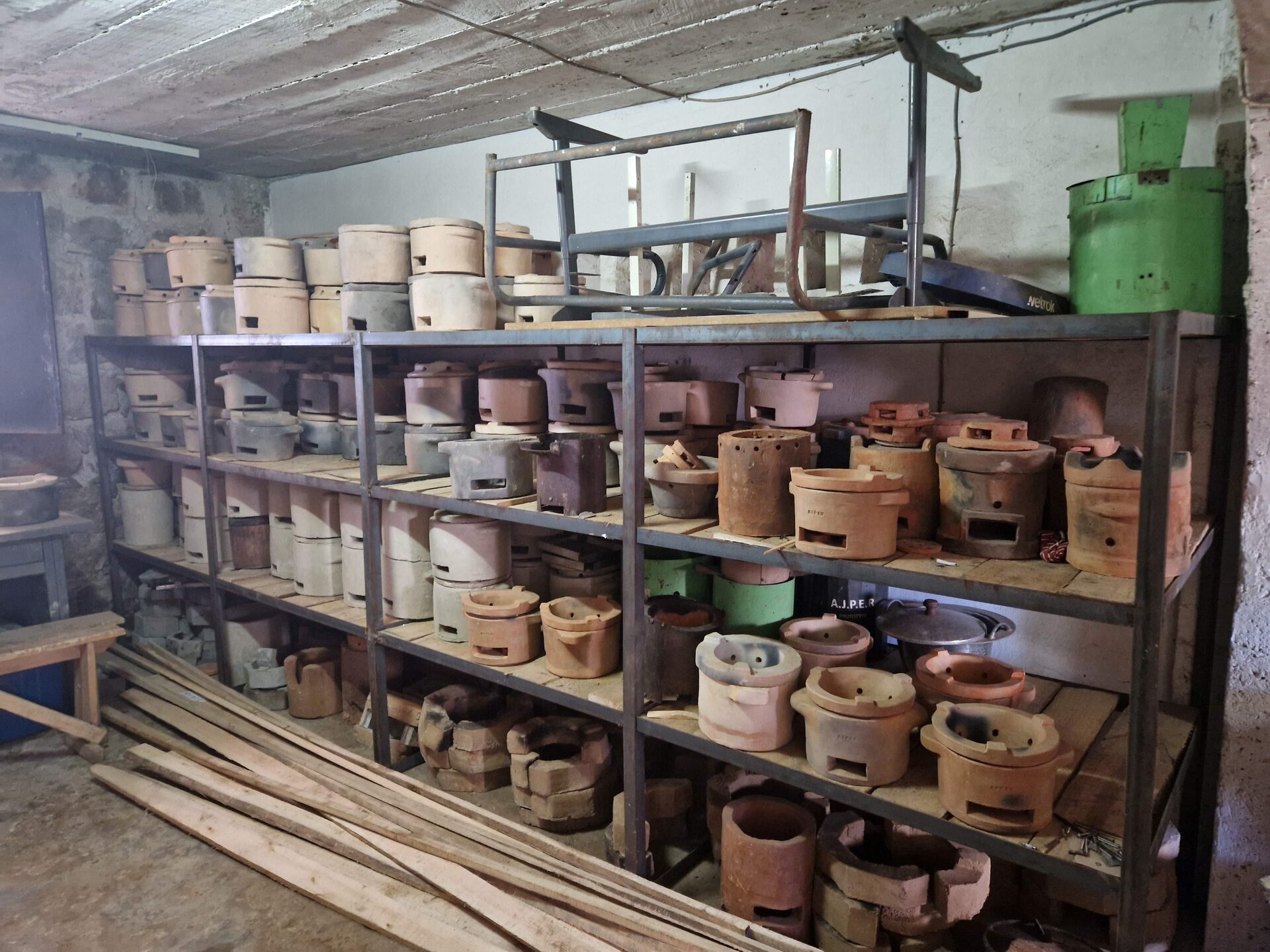
- Optimization campaign for decentralized stove production for six villages
- Awareness-raising campaign in sustainable agriculture for six villages by women for women
- Introduction of a receipt system and involvement of the authorities to monitor the development of the supply chain
- Doubling the production volume of the existing factory through regional demand and material supply.
Innovation and exemplary nature of the project
The project builds on existing local structures and is designed to achieve a high level of effectiveness in the target region. The most important and effective initiatives currently contributing to mitigating the premature death problem in Madagascar are the Swiss NGO ADES (Association pour le Dévelopement de l’Énergie Solaire), Project Tsiry, the GIZ project Energizing Development Madagascar (EnDev) and the UNDP Clean Cookstoves Initiative. In contrast to these and some other initiatives, this advanced project approach generates additional benefits by adding the aspect of improving the soil and increasing yields to the usual approach of educating target groups and helping them to help themselves in the production of more energy-efficient cooking appliances from local resources. The decentralized non-profit approach, which is structurally very similar to the DBU citizen energy projects in Central and Eastern Europe, is also interesting.
Special aspects of the project
Another win-win situation could arise from the bundling of several different ongoing projects and other initiatives from the DBU network. In concrete terms, this could include networking with RezyCoal from Aachen and AfricaGreenTec, which has also been active in Madagascar for some time.
Funding topic 7: Resource-efficient processes, production processes and materials
Project implementation:
Associated partners:
Places of work: Germany and Madagascar
Funding period: November 2024 to November 2026
Project costs: Total volume: 127,500 euros, funding from DBU: 127,500 euros
DBU-AZ: 39858/01
Status: 09.02.2026