High School Citizen Science for a Sustainable Future (HiS!CiSS) – Citizen science at secondary schools for a sustainable future
Keywords: education for sustainable development, SDGs, climate change, sustainability skills, planetary health, citizen science
Subject and objectives of the project
With rising temperatures and an increase in extreme weather events, climate change is directly affecting ecosystems and therefore the quality of life and health of people worldwide. In this context of planetary health, the project “High School Citizen Science for a Sustainable Future (HiS!CiSS)” is to be realized, which focuses on the non-formal education of students (aged 15 to 17) and the further training of teachers in the Czech Republic. The aim is to enable pupils to understand the interactions between the environment, health and sustainability and relate them to their own living environment.
The project focuses on the active participation of pupils and teachers in citizen science activities outside of formal lessons, which enable them to collect and analyze environmental and health data. Individual students and teachers will be specially trained as “ambassadors” to support the scientific activities at their schools. These ambassadors contribute to the continuity of the project, the dissemination of the project idea and methodological knowledge and the motivation of their fellow pupils.
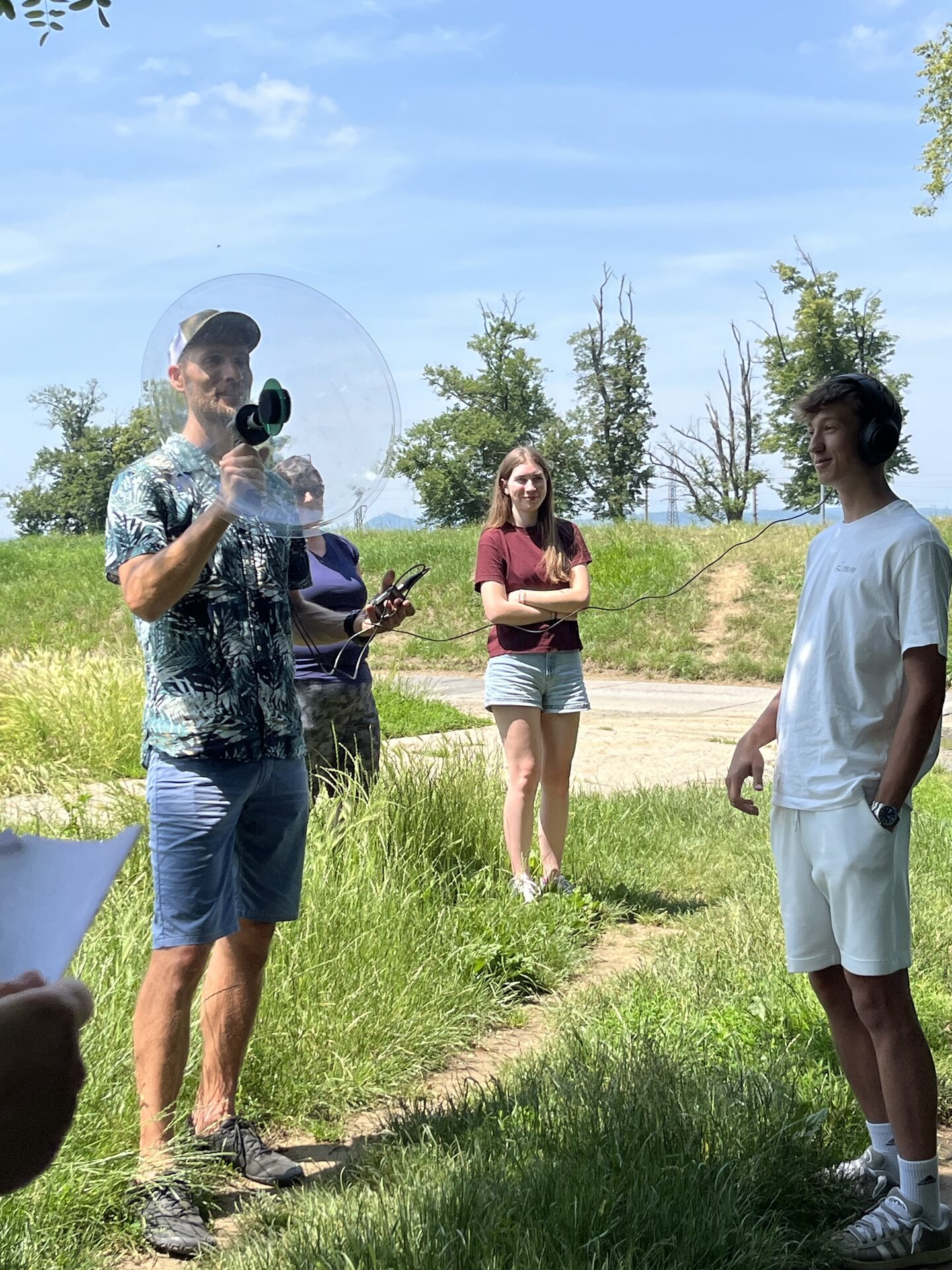
HiS!CiSS focuses on the development and testing of a new year-round educational program with several learning modules aimed at collecting and analyzing data on heat stress and its effects on the vitality of trees and ecosystems in the school environment and human health. Participants will be trained in data collection methods in geosciences and environmental sciences (dendrochronology, ecoacoustics), environmental medicine and biometeorology (health aspects of climate change, thermosensitivity) and digital mapping. The learning modules will be implemented and tested at five schools in the Zlín region (CZ) under the guidance of Tomas Bata University. Various educational materials, maps of the collected data and five school-specific heat protection plans will be produced.
Methodologically, the project is breaking new ground for the Czech Republic in the area of citizen science offers for schools, if analysis methods are to be used as follows:
- Collection, evaluation and mapping of microclimatic data such as temperature, humidity, wind speed in urban and near-natural ecosystems/habitats and consideration of the effects of climate change;
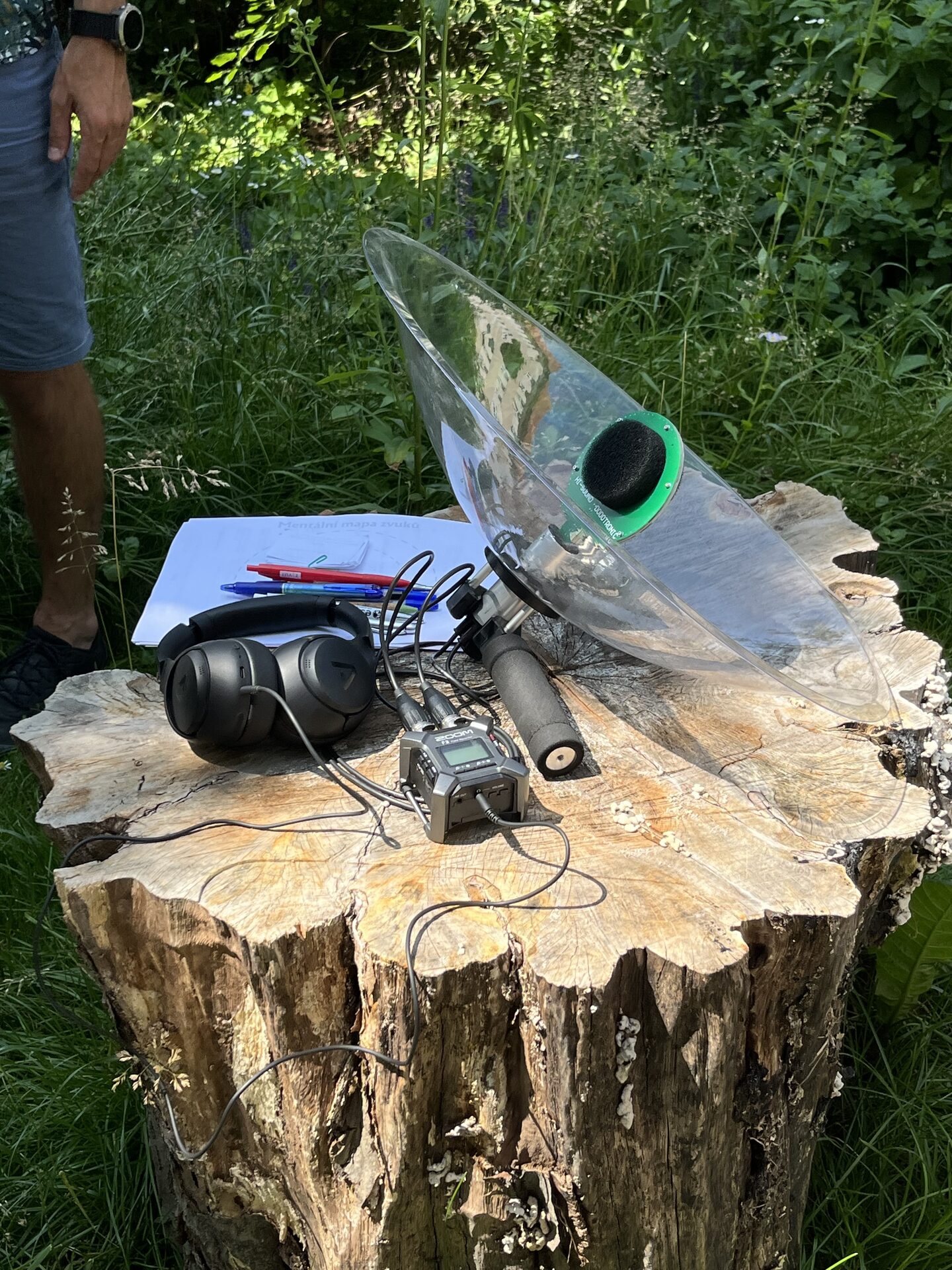
- Ecoacoustics and geodata-based mapping of animal species (especially birds and insects); investigation of the influence of climate change;
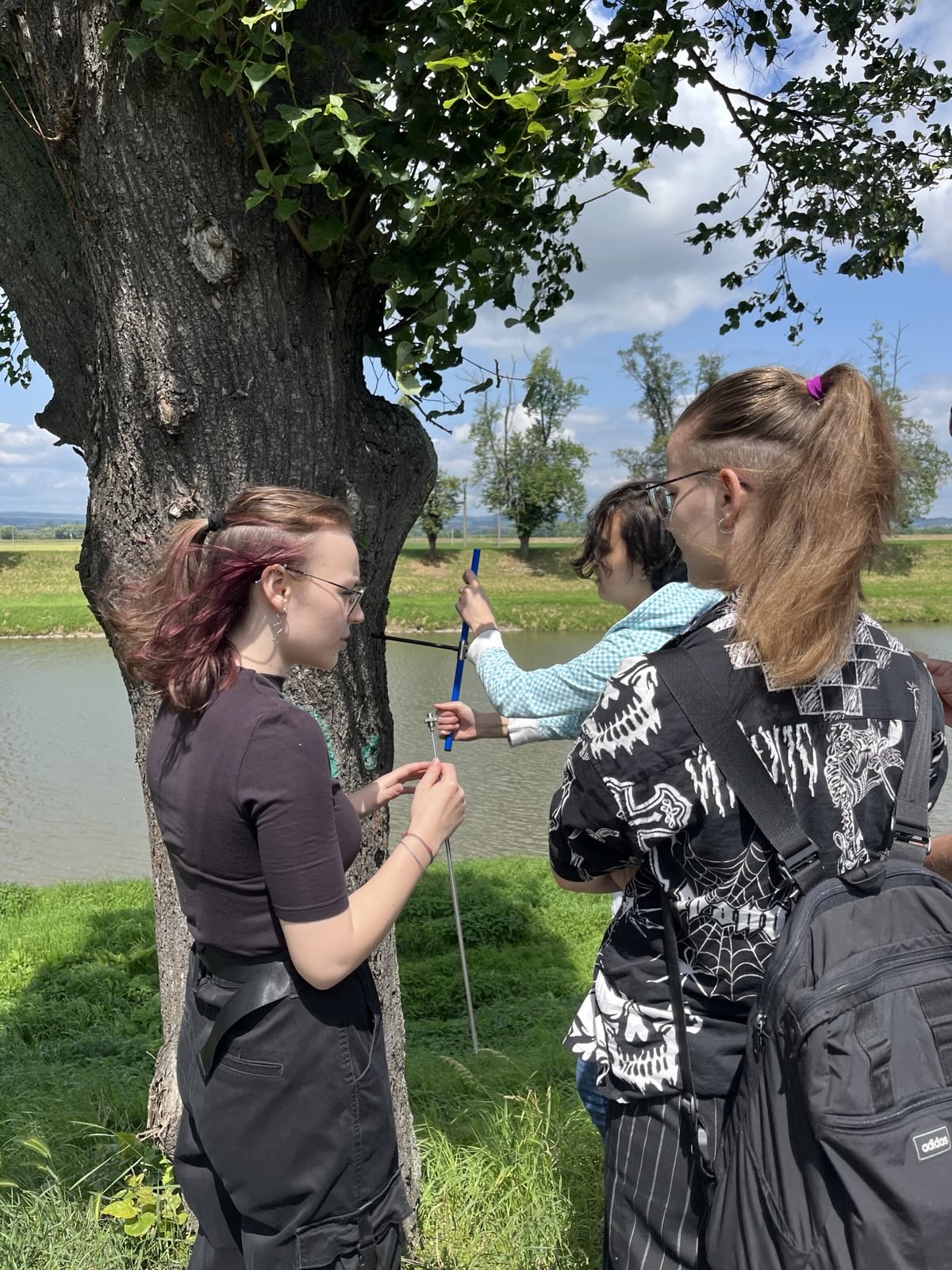
- Dendrochronology – Investigation of the impact of climate change on woody plants based on the analysis of drill cores; consideration in the context of mapping activities;
- Training of teachers and students on the methods and the establishment of cooperation with scientific institutions. institutions.
Work packages and expected results:
WP 1: Organization and communication, participation of schools – start with an information campaign to recruit schools and ambassadors, followed by virtual conferences for networking.
Project result 1.1: Implementation of an information campaign
Project result 1.2: Registration of 5 secondary schools and grammar schools
Project result 1.3: Online webinar for registered schools, 20 participants
Project result 1.4: Nomination of 10 – 15 ambassadors and 5 – 10 teachers from 5 schools and their award
Project outcome 1.5: Implementation of an online conference with four presentations and 40 participants
Project outcome 1.6: Recruitment of at least 2 German schools to discuss the concept and materials, participation of 1-2 teachers, 5-10 students
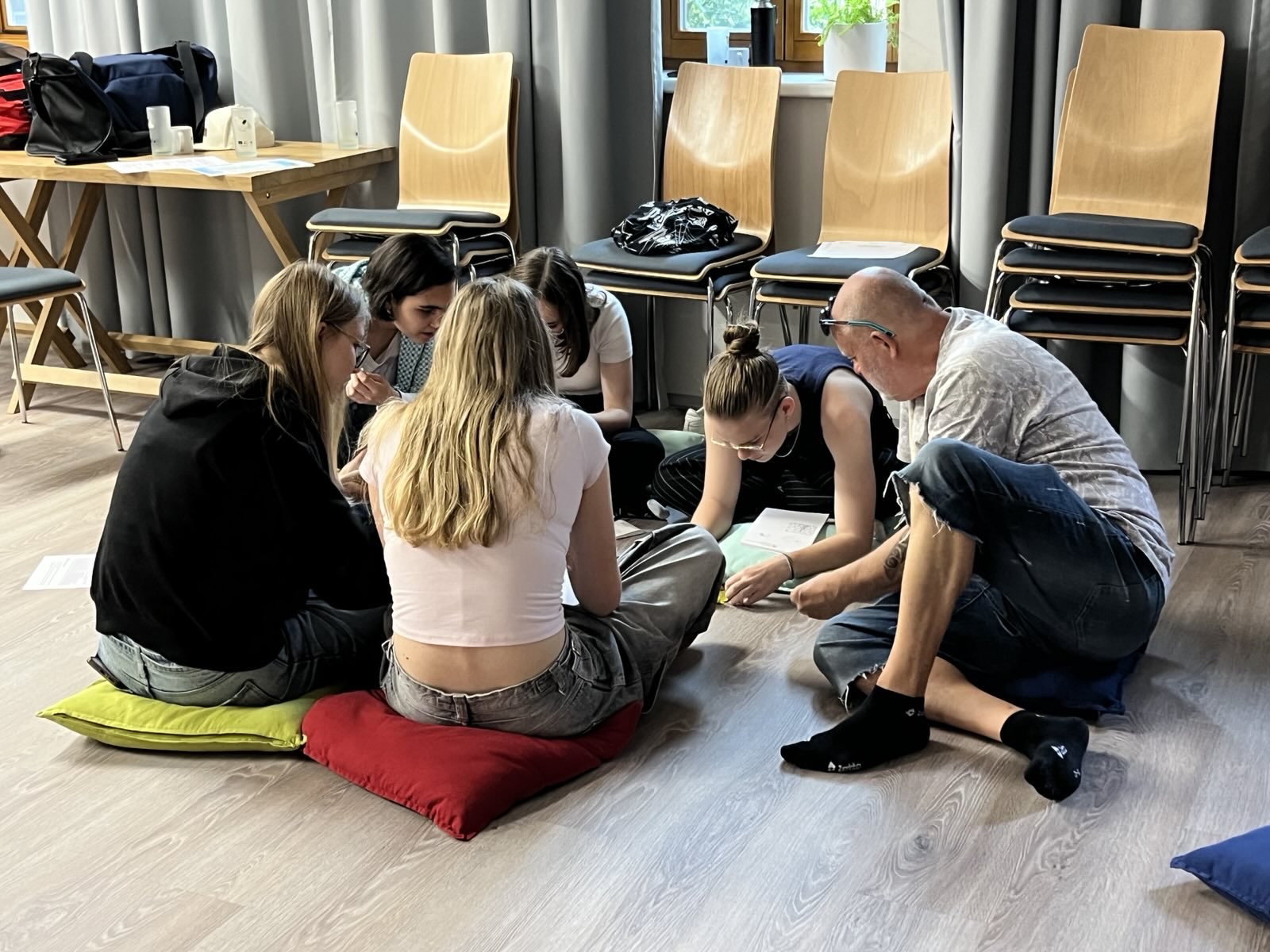
WP 2: Development and adaptation of educational materials – creation of core and secondary modules (e.g. dendrochronology, ecoacoustics, mental mapping) and video tutorials. Adaptation of content based on experience from the first year of the project.
Project result 2.1: Development and adaptation of methodological instructions, formalized research protocols, tutorial videos, methodological and didactic sheets with infographics for the year-round educational program (online)
Project result 2.2: Establishment of a CZ online portal for the publication of project results, monitoring data, student contributions, and above-mentioned materials Project result 2.3: Development of a German-language website, transfer of materials after discussion with German teachers and experts (selected materials will be adapted and published).
Project outcome 2.3: Development of a German-language website, transfer of the materials and the concept after discussion with German teachers and experts (selected materials are adapted and published)
Project outcome 2.4: English and/or German versions of selected materials
WP 3: Training of pupils and teachers as ambassadors to impart the necessary knowledge for independent data collection and analysis steps.
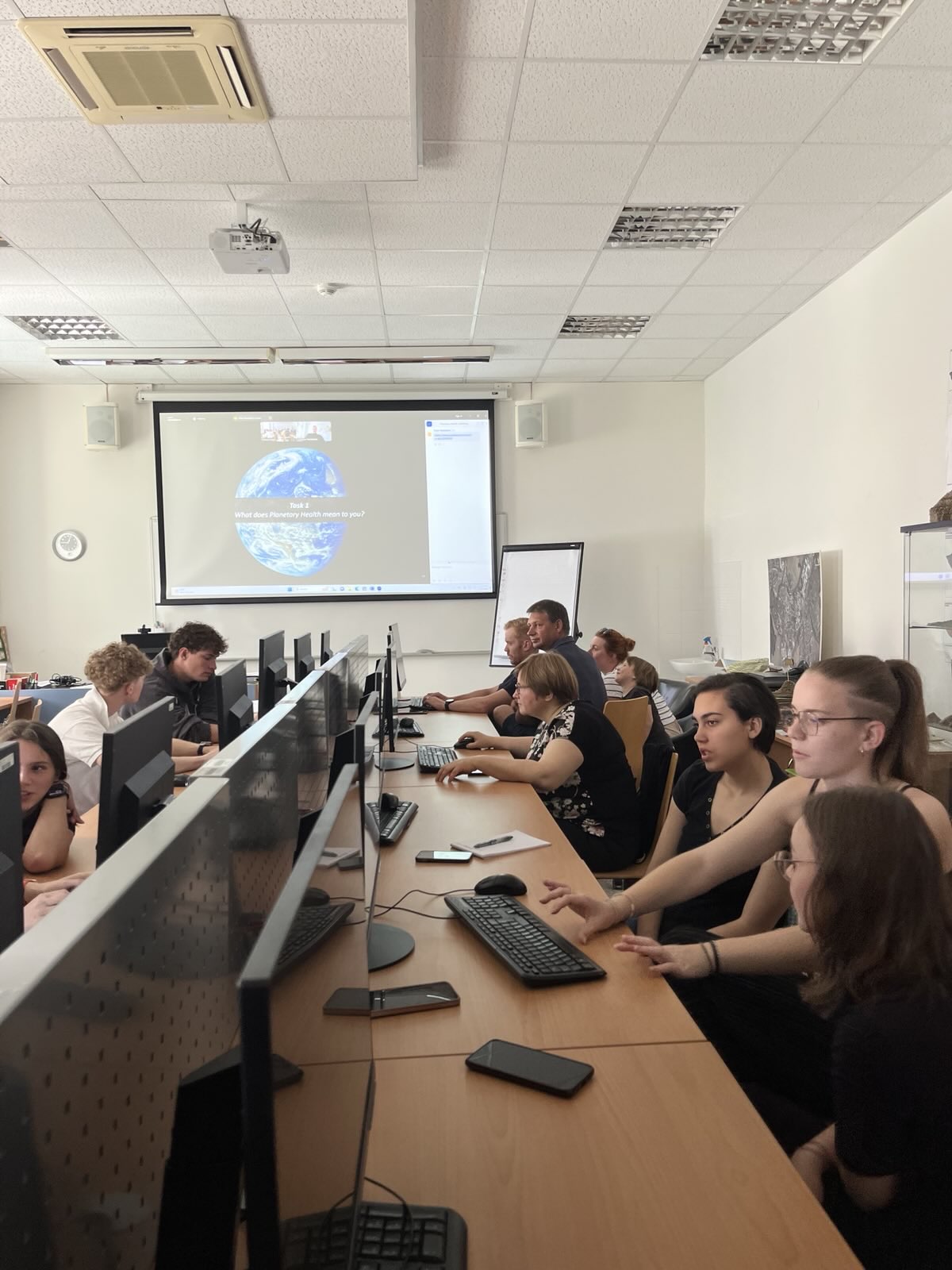
Project outcome 3.1: Implementation of a 2.5-day face-to-face workshop for ambassadors (40 participants) with a presentation on Planetary Health
Project outcome 3.2: Implementation of an online webinar on project methodology, data collection and the use of digital tools for communication with new ambassadors (20-30 pupils, 5-10 teachers)
Project outcome 3.3: Implementation of 2-3 German-Czech online conferences on the current status of project activities, exchange of experience and information
The pupils and teachers are supported in data collection and project implementation through information in the Czech online portal and continuously updated materials
WP 4: Implementation of projects, monitoring in the areas of dendrochronology, ecoacoustics, participatory mapping
Project outcome 4.1: Year-round data collection on all three topics at five participating schools
Project outcome 4.2: Preparation and implementation of 10 webinars (15-20 pupils* and 5-10 teachers)
The information/data will be used by the project team to publish the results in popular science journals and peer-reviewed scientific journals.
WP 5: Internal evaluation, data analysis and publication of project results
Project result 5.1: Internal evaluation
Project result 5.2: Publication of project results – in the Czech online portal, 4x newsletters, 2 popular science articles in Czech journals, 1x at regional environmental education conference, at 2-3 German-Czech online conferences
WP 6: External evaluation
Project outcome 6.1: External interim and final evaluation
Project outcome 6.2: Discussion of transferability to German schools with participants from Germany (Delphi method)
WP 7: Project administration – ongoing coordination and reporting to the DBU.
Innovation and exemplary nature of the project
The innovative character of this project lies in the application of environmental analytical methods using digital technologies and their integration into contemporary educational concepts in general education schools. The aim is to promote a basic understanding of environmental science methodology and issues in the context of environmental problems and climate change.
The selected research and educational topics have hardly been included in curricula in the Czech Republic and Germany to date. They have not yet been taught in either formal or non-formal education. These are methods and research approaches that are used as standard in the Czech Republic at natural science and social geography universities and at selected institutes of the Academy of Sciences. As the methods are suitable for collecting relevant data in the local environment in the context of climate change, these approaches are suitable for practical, project-based learning in secondary schools. The citizen science approach offers an incentive for students and teachers because it opens up the opportunity to actively participate in real scientific research projects and in the development of solutions (e.g. heat protection plans). This allows participants to make a direct contribution to research and feel part of a larger scientific community.
Special aspects of the project
The “HiS!CiSS” project was planned in collaboration with experts from the fields of geosciences, psychology and health sciences. This interdisciplinary approach and the support of a German-Czech advisory board should ensure that the learning content is both scientifically sound and practicable and that it can be transferred to the German educational landscape. This educational initiative is intended not only to raise awareness of biodiversity conservation and planetary health, but also to lay the foundations for sustainable action and environmental commitment among high school students.
Funding topic 1: Sustainability communication, education and evaluation
Project implementation:
- Ludwigshafen University of Business and Society, IMÖVG Institute
- Tomas Bata University in Zlín, Faculty of Logistics and Crisis Management, Uherské Hradiště
Associated partners:
Location: Czech Republic
Funding period: January 2025 to March 2027
Project costs: Total volume: 174,313 euros, funding from DBU: 174,313 euros
DBU-AZ: 39704
Status: 09.03.2026