Environmental education on sustainable nutrition, taking into account the Planetary Health Diet, for Hungarian primary school children
Keywords: education for sustainable development, sustainable nutrition, Planetary Health Diet
Subject and objectives of the project
Around 500,000 children take part in school meals in Hungary. This fact offers a great opportunity, particularly in the primary school sector, to implement a change towards more sustainable school meals with a focus on the Planetary Health Diet (PHD). This is where the project comes in for the target groups of primary school children aged nine to twelve, teachers, parents and school caterers. They are made aware of the health and ecological consequences of nutritional decisions for specific target groups and across target groups and motivated to adopt more sustainable behaviors by building up expertise at an early stage.
To date, there has been a lack of knowledge about the links between nutrition and sustainability, particularly among the Hungarian population (including parents). Many people only associate environmental impacts with food from overseas, without knowing the ecological footprint of their own diet. It is particularly problematic that eating habits and food preferences are already established in childhood. This is where the project comes in: it is hypothesized that people, especially families, would pay more attention to their own diet if they were aware of the negative health effects of a traditional diet versus the benefits of a PHD-based diet. This is why the topic is being addressed in the school context for the first time, as sustainable nutrition and food production are not yet part of the official curriculum or supplementary environmental education in Hungarian elementary school.
Accordingly, the aim of the project is to map Hungarian school catering in terms of sustainable nutrition, taking into account the topic of PHD in educational concepts in a target group-oriented manner and to contribute to the conversion of school catering in initially three model elementary school. The aim is to achieve an understanding of sustainable nutrition with a focus on PHD, particularly in the teaching/learning setting, as well as acceptance of the model implementation in their own school catering among the above-mentioned target groups. Political discussions and, ideally, reforms that can be implemented nationwide are to be initiated by the project.
Sub-goals of the project
Raising awareness of the above-mentioned target groups for sustainable PHD nutrition;
Implementation of the topic of “delicious PHD”
a) in Hungarian primary school lessons
b) in Hungarian school catering;
Opening up the topic of sustainable school catering, including at political decision-making level.
Work packages and expected results
WP 1: PHD in Hungarian school catering – sustainable can also be delicious
Project result 1.1: a recipe competition with 70 submitted recipes, with the participation of approx. 200 families;
Project result 1.2: 1 digital recipe book for school caterers with approx. 60 recipes + compact overview of the most important information about the Planetary Health Diet (approx. 10 pages);
Project result 1.3: Calculation of the CO₂ footprint for 80 dishes (for 1 school month) with four menu cards with graphic presentation of the results (print and online);
Examples of the menu cards:
https://maradeknelkulalapitvany.hu/wp-content/uploads/2025/11/Pais-1.-het-1.pdf
https://maradeknelkulalapitvany.hu/wp-content/uploads/2025/11/Pais-2.-het.pdf
Project result 1.4: a technical article (2.5 pages) on calculating the CO₂ footprint in the national Journal of Food Inspection Announcements;
Project result 1.5: functional online calculator “CO₂ footprint of our dishes” on the project website.
WP 2: Introduction of sustainable nutrition with a focus on PHD in lessons at Hungarian elementary school
Project outcome 2.1.: Recipe booklet with 72 recipes from the DBU-funded projects, adapted for use in cooking lessons (print and online);
Project outcome 2.2.: new qualification offer for teachers with methodology (print and online), at least nine qualified teachers in 3 pilot schools;
Project result 2.3.: new methodological material for approx. 30 teaching units in theory and practice for science and natural history lessons (online) and its testing with a total of 225 to 288 pupils.
WP 3: Raising primary school children’s awareness of sustainable nutrition and educating parents
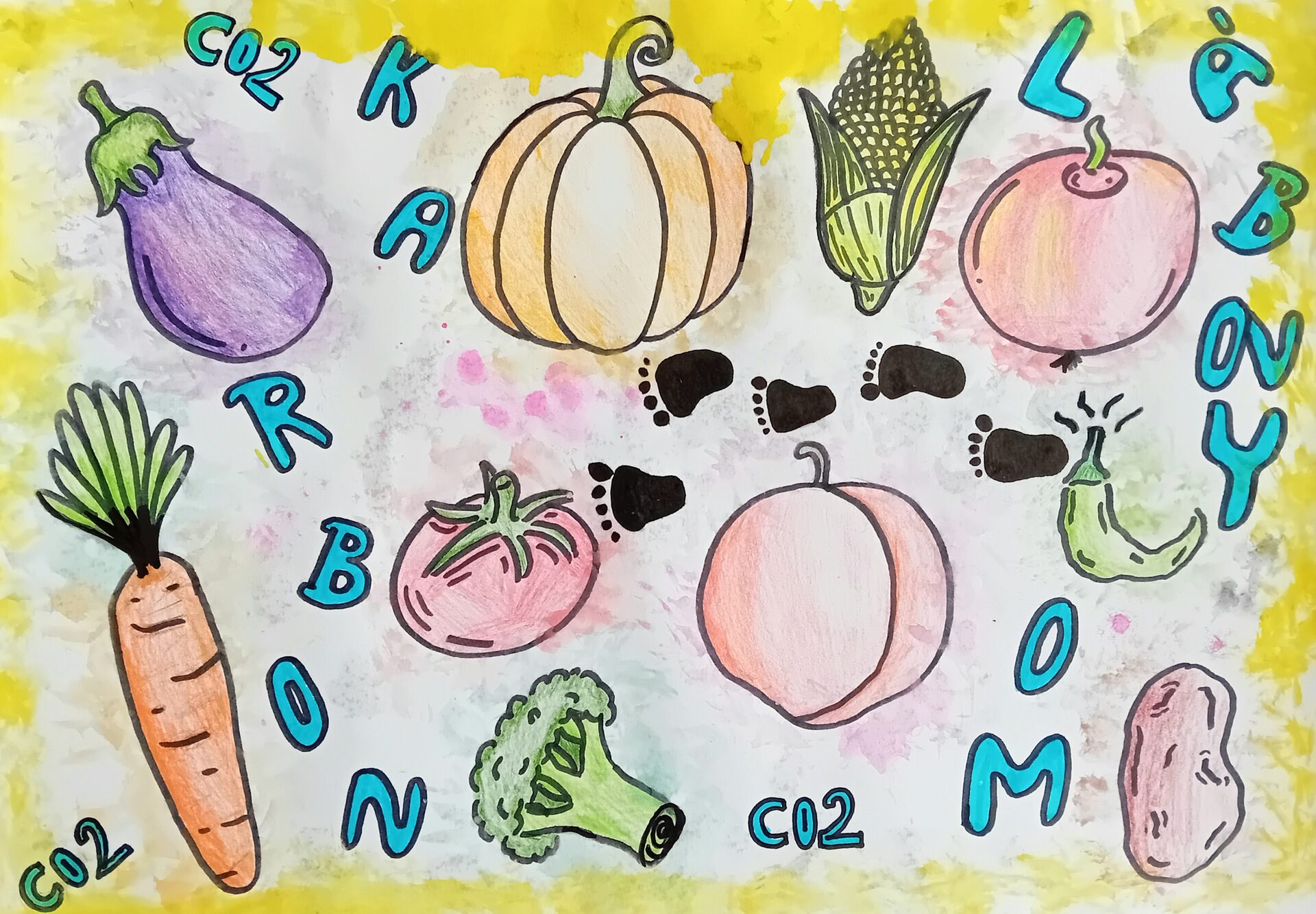
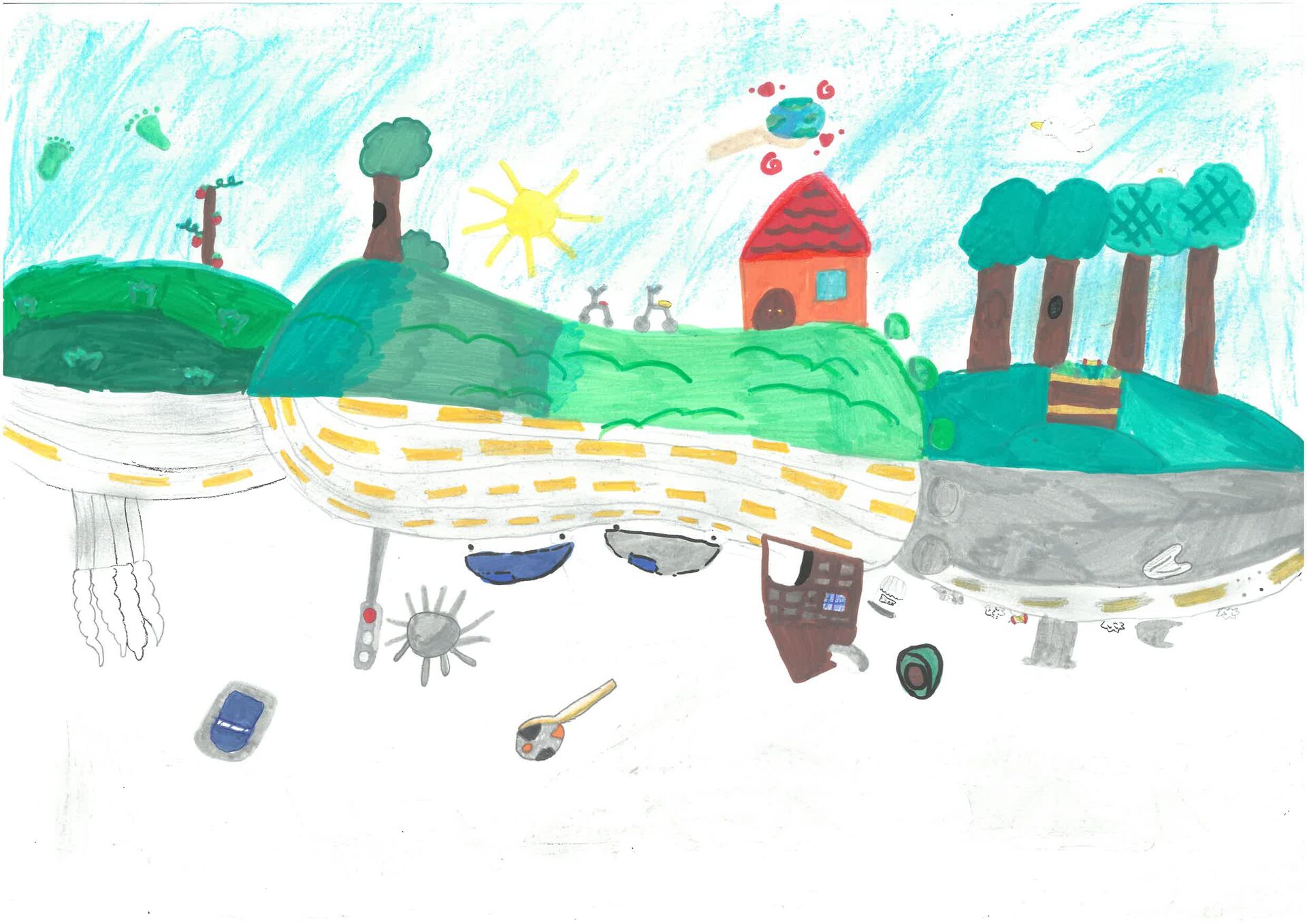
Project result 3.1.: Drawing competition with approx. 300 children from the 3 pilot schools, at least 50 drawings;
Project result 3.2.: Participation of a school class in the national caterer cooking competition;
Project result 3.3.: Four targeted thematic information campaigns with 75 published articles.
WP 4: Opening up the topic of sustainable school catering at the decision-making level
Project outcome 4.1: a full-day specialist event with approx. 50 participants and active involvement of key stakeholders, with the creation of a policy brief with key recommendations.
WP 5: Project management and communication of results
Project result 5.1: Project website with continuously updated articles and materials with expected reach: a total of 3,000 visitors in 30 months.
Innovation and exemplary nature of the project
Even though the full implementation of the Planetary Health Diet (PHD) in Hungarian school catering is currently restricted by law, its flexible interpretation enables a gradual approach: the focus is on a stronger emphasis on plant-based foods and the reduction of animal products. As eating habits cannot be changed abruptly, the project relies on a process-oriented, practical approach.
A central innovative component is the development of a digital recipe book with 60 tested recipes for school catering. The recipes are created as part of a competition with the active participation of children (9-12 years) and parents and are tested by the KÖZSZÖV trade association and adapted to Hungarian practice. In addition, the carbon footprint of 80 school meals will be calculated and graphically displayed on menu cards for the first time in Hungary. On this basis, a new online calculator “CO₂ footprint of our dishes” will be created, the functionality of which will be tested in cooking lessons and then made publicly available.
Another innovation is the systematic integration of the Planetary Health Diet into primary school lessons. To this end, a recipe booklet with 72 tried and tested recipes for cooking lessons is being developed and tested together with teachers and children in three pilot schools. At the same time, a new training program for teachers in grades 3-5 (subject and science, including cooking lessons) is being developed, which will be evaluated after a pilot phase and prepared as a transferable methodology for other schools and educational contexts. In addition, methodological material for around 30 teaching units will be developed, tested and published online.
Children and parents are actively involved in the innovative communication of the topic of sustainable nutrition: a drawing competition based on the CO₂ menu cards and the participation of a children’s jury in the national caterer cooking competition create public awareness. To accompany this, a social media campaign on the Planetary Health Diet is being implemented for the first time in Hungary, providing parents with practical information and motivating them to adopt healthy, sustainable eating habits in everyday family life.
Funding topic 2: Sustainable nutrition and sustainable food handling
Project implementation:
Associated partners:
- National Association of Catering Service Providers in the Public Sector (KÖZSZÖV)
- Dezső Pais (elementary school)
- Aquincum English-Hungarian (bilingual elementary school)
- Imre Németh (elementary school)
Places of activity: Hungary
Funding period: October 2025 to March 2028
Project costs: Total volume: 148,921 euros, funding from DBU: 104,245 euros
DBU-AZ: 40229/01
Status: 09.02.2026