EnerCOMPASS – Compass for Energy Communities to Navigate Market Success
Keywords: citizen energy, knowledge transfer, participation, cooperation with SMEs
Subject and objectives of the project
The project focuses on strengthening the economic viability of energy communities in the Czech Republic. It deals with three central topics:
1. the lack of a comprehensive overview of the citizen energy sector in the Czech Republic,
2. the economic sustainability of communities based solely on electricity sharing and
3. the lack of innovative business models for energy communities.
The project combines standardized analysis approaches with an innovative hackathon methodology, structured mentoring in the form of a twinning program, attractive output forms (videos, graphic publications, workshops with experts) and effective, targeted dissemination methods via various channels (social networks, internet, newsletter). The project will initially map the Czech and German environment in detail. It will identify the needs and obstacles of energy communities in the Czech Republic as well as transferable economic models from Germany. Based on these findings, economically sustainable operating models for energy communities in the Czech Republic will be recommended. These models are described in a clear, publicly accessible publication, which also contains at least three case studies of German energy communities. In order to put the knowledge into practice and strengthen the capacities of Czech energy communities, the project will develop an intensive mentoring program that will bring together suitable energy community projects from the Czech Republic and Germany. The project will then pass on the relevant knowledge to Czech energy communities in workshops and a communication campaign in the Czech Republic. In addition, concepts will be developed for systemic measures to strategically support the development of municipal energy in the Czech Republic in the event that obstacles cannot be removed at the level of individual energy community projects. Transferable results of the project will be extended to other Central European countries.
Work packages and expected results:
WP 1: Mapping, analysis and good practice examples from Germany
Project result 1.1: Analysis of at least ten Czech pilot energy communities
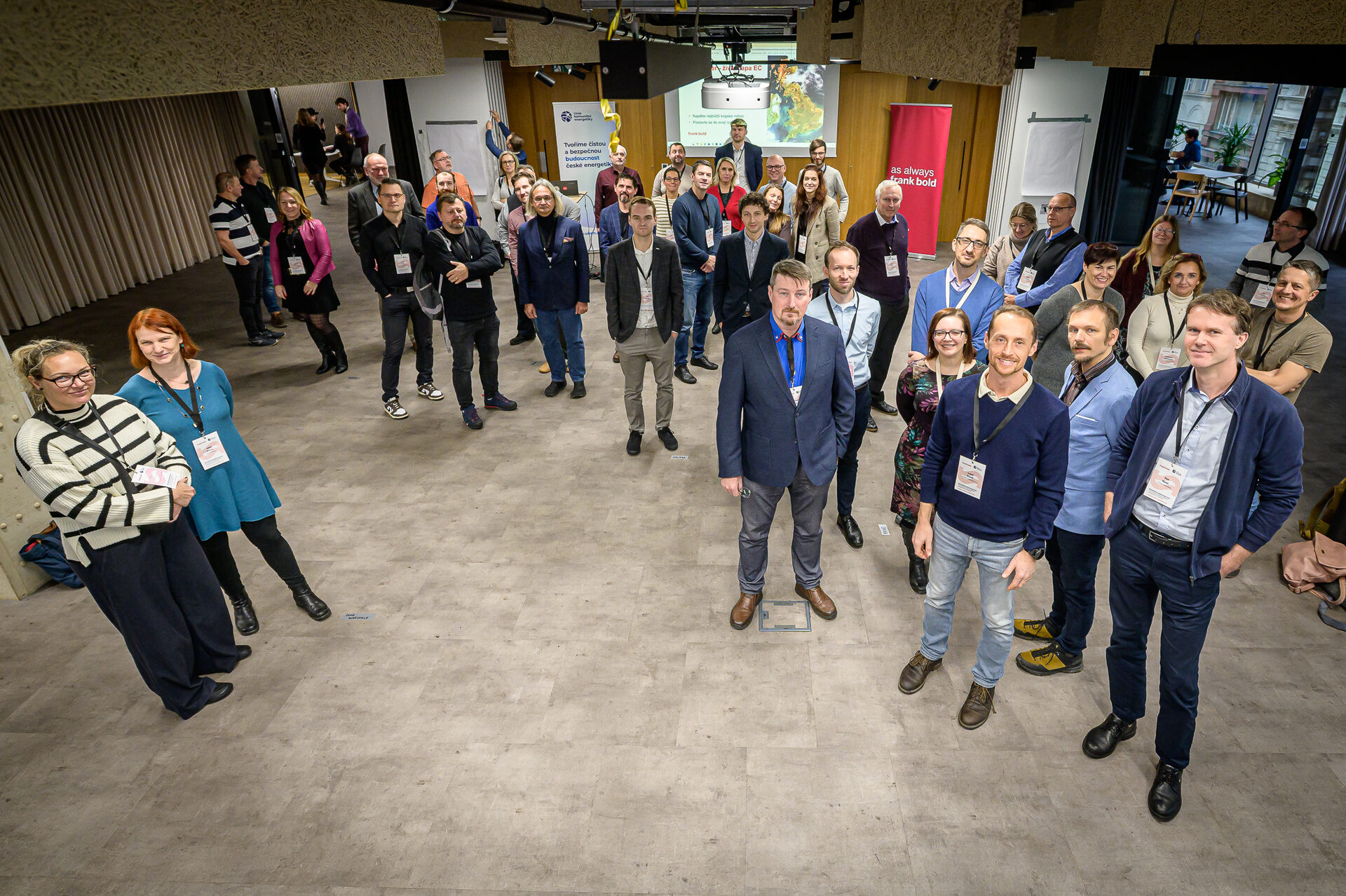
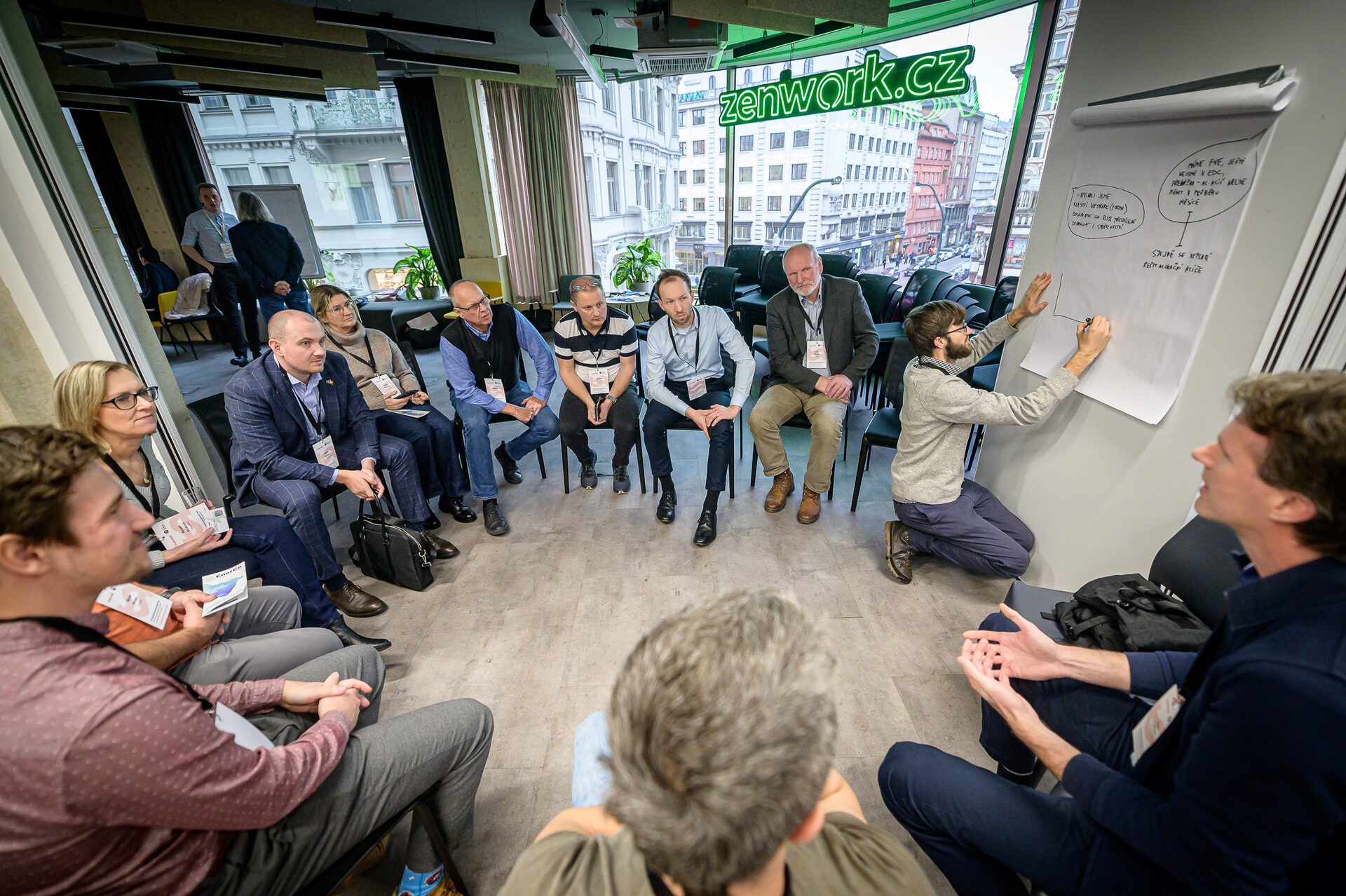
Project result 1.2: Stakeholder hackathon (at least 25 participants)
Project result 1.3: German market research (interviews + secondary research)
Project result 1.4: Publication with practical recommendations for energy communities (150 printed copies, over 300 downloads)
WP 2: Exchange of experience and capacity building
Project outcome 2.1: three Czech-German joint partnerships with structured mentoring – Twinning program
Project outcome 2.2: three study trips to Germany
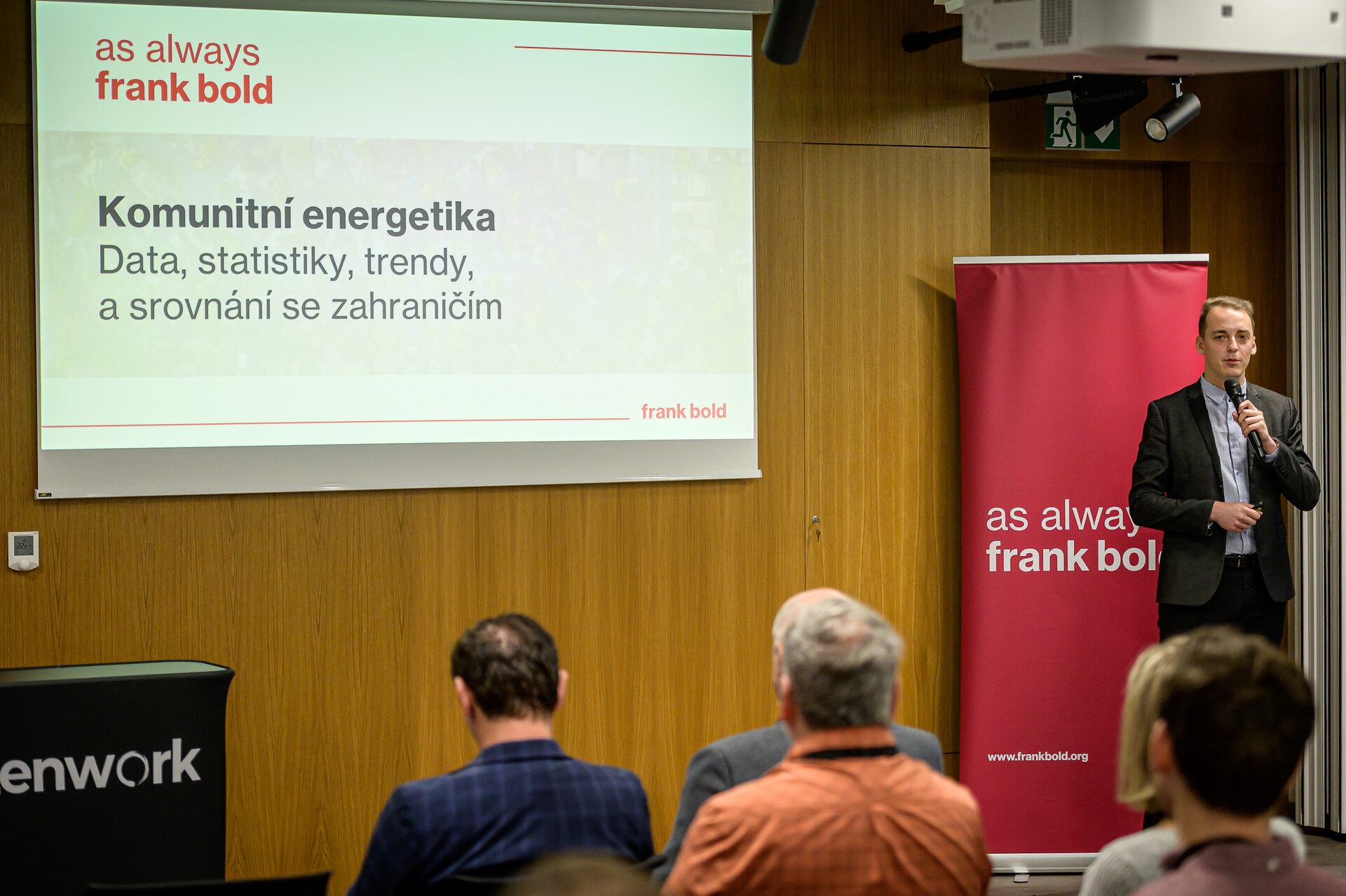
Project outcome 2.3: three expert workshops (30 participants each)
WP 3: Policy advice
Project outcome 3.1: Four stakeholder consultations with UKEN members
Project outcome 3.2: Strategy paper with more than five recommendations
Project outcome 3.2: Three advocacy meetings with political parties and public institutions and three meetings with partners from the energy sector
WP 4: Communication and dissemination
Project outcome 4.1: more than eight communication outputs across all channels (internet, social media, newsletter) with a total reach of 13,750 newsletter subscribers, 11,000 social media followers, over 3,000 web followers
Project outcome 4.2: three video contributions from the Twinning program
Project outcome 4.3: three articles in international media Project outcome 4.4: international webinar for CEE stakeholders
Innovation and exemplary nature of the project
The project brings advanced approaches from software development to the Czech energy industry, such as the use of hackathons to quickly identify and prioritize needs and obstacles of energy communities. This tool enables deeper insights than conventional research methods while creating space for networking between stakeholders.
The project connects various interest groups – from energy communities to SMEs and municipalities – in an innovative way that has not yet been implemented in this form in the Czech energy industry.
Another important innovation is the Czech-German twinning program for energy communities, which systematically transfers proven methods of economically self-sustaining models from the German market to the emerging Czech sector. This approach goes beyond the focus of energy communities on pure electricity distribution and aims to diversify activities towards collective investments in energy resources.
At the heart of the transferred models is an innovative ownership and investment structure that is still lacking in the Czech renewable energy segment. Although citizens are used to crowdfunding campaigns, they perceive renewable energy primarily as a subsidized commodity. The idea of financial participation in wind or solar parks with subsequent profit from the generated energy is truly revolutionary in the Czech Republic. Concrete examples from Germany can inspire the Czech energy community to adopt similar models.
The study of the German energy community market and its connection with the needs of Czech energy communities, identified through the analysis and hackathon and summarized in a comprehensible, publicly available publication, represents the missing bridge for the transfer of know-how from Germany to the Czech Republic.
The project has a model character and aims at the transferability and scalability of its results, both to other communities within the Czech Republic and to neighboring countries with similar history and legislation (e.g. Slovakia, Hungary, Poland). With this in mind, the main project results will be published in English on the UKEN website. Short video clips from the Twinning program will be freely available online and accessible to a wide international audience thanks to English subtitles and well-chosen keywords. International dissemination of the results will utilize the membership base of the European association REScoop.eu, of which UKEN is a member. It will implement a webinar in English for organizations from the above mentioned countries, providing space for discussion and motivation to replicate the project activities. The webinar will be available online as a video.
Special aspects of the project
The aim of the project is also to integrate small and medium-sized enterprises (SMEs) into local communities, which can play an important role in ensuring the economic stability of energy communities. In addition to their experience in creating economically viable operating models, they can be important consumers of the electricity generated and thus a source of capital for the energy communities. The project is in line with the United Nations Sustainable Development Goals, in particular Goal 7 (Affordable and Clean Energy), Goal 11 (Sustainable Cities and Communities) and Goal 13 (Climate Action).
Funding theme 6: Renewable energy, energy saving and efficiency
Project implementation:
- Frank Bold Society e. V., Brno, Czech Republic
- Unie komunitní energetiky / Community Energy Union e.V. (UKEN), Brno, Czech Republic
Associated partners:
Location: Czech Republic
Funding period: January 2026 to December 2027
Project costs: Total volume: 174,704 euros, funding from DBU: 122,293 euros
DBU-AZ: 40737/01
Status: 09.02.2026