Digital education for sustainable development in Hungary
Keywords: Education for sustainable development, SDGs
Subject and objectives of the project
The Hungarian curriculum for elementary school has been expanded to include sustainability and media education since 2012, but their practical integration into the school curriculum is still in its infancy. In recent years, patriotic education and identity have been given more priority, so the European dimension of the curriculum and global climate protection have been pushed into the background. The aim of the project is therefore to teach education for sustainable development (ESD) at elementary school in Hungary and to enable pupils to take action to shape a sustainable future. Teachers play a key role in this, but they often lack the necessary specialist knowledge or confidence to integrate this highly complex topic into their lessons.
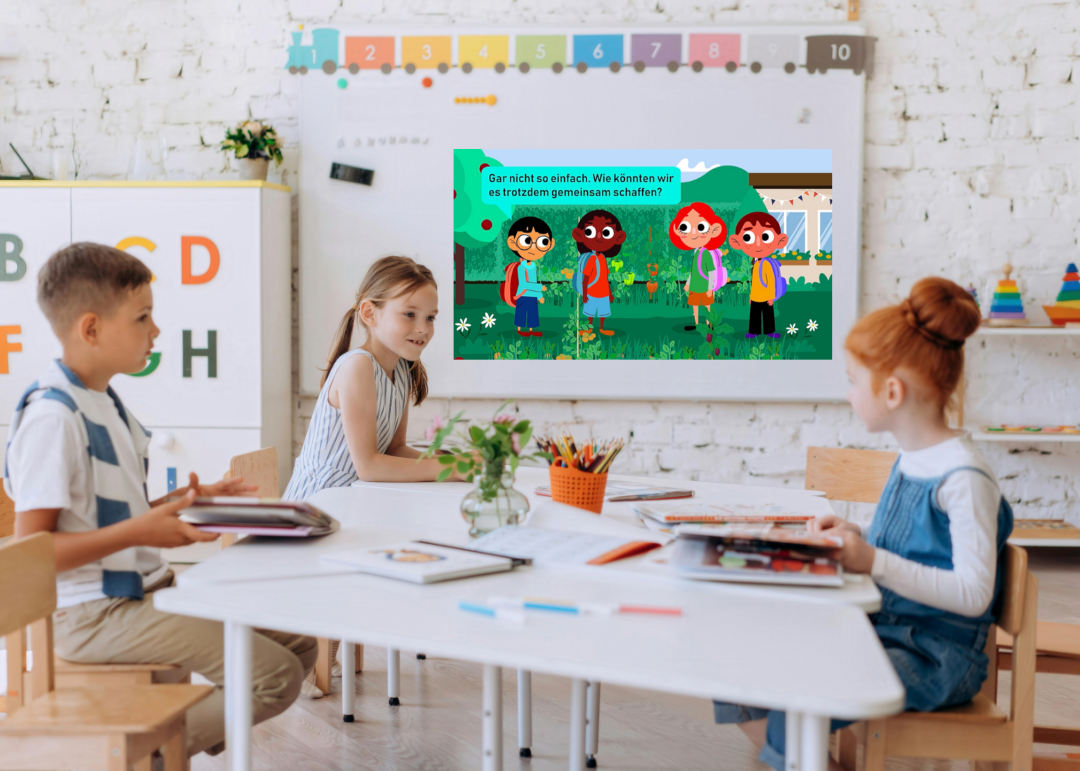
Therefore, the Digital ESD project has set itself the mission of equipping Hungarian teachers with the tools and confidence to integrate ESD into their classrooms so that students can critically address global challenges and become active change agents. A digital learning platform has been developed to provide teachers with teaching and learning materials to equip children in grades 3 to 5 with the knowledge they need to reflect on and shape their thinking and actions in the context of sustainable development. The educational material on the 17 Sustainable Development Goals (SDGs) not only addresses the national education strategy, but also motivates joint action and participatory change and improvement in the quality of life. The special feature of the project is the involvement of the target group of teachers and schoolchildren in the development and production process of the digital learning worlds and the accompanying educational material. In this way, the participatory concept of the project is realized right from the start. The development of tailor-made materials on the 17 SDGs, associated dilemmas and the Wedding Cake model, as well as the implementation of further training for teachers, not only supports the national education strategy, but also motivates people to act together and improve their quality of life.
Work packages and expected results:
WP 1: Project management and implementation
With the help of the first work package, legitimate project management is ensured and takes place throughout the entire project duration.
WP 2: Curriculum analysis
In this work package, a comprehensive analysis of the Hungarian education system, the curricula and the needs of schools will be carried out. This also includes an assessment of the current status of the integration of the SDGs into teaching as well as the interdisciplinary and subject overlaps. The Hungarian school landscape will also be involved in the process in a participatory manner. The specific aim of the national analysis is to identify the most efficient matches between ESD and Hungarian primary education. The holistic approach of this project is realized by taking into account the country-specific circumstances.
WP 3: Content development
The main contents of the SDG framework are directly integrated into handouts for each of the 19 learning worlds (17 SDGs, SDG dilemmas and the SDG wedding cake model). These handouts should not only outline the goals and background of the SDGs, but also provide concrete implementation options and materials for teaching. A combined handout will be developed that summarizes the content in a uniform structure. These integrated handouts offer teachers a practical and usable basis for integrating the topics of the 19 learning worlds holistically into their lessons. The handouts not only include an introduction to the available teaching and learning materials, but also the respective learning objectives, a glossary that addresses difficult terms in the relevant learning world, tasks to be used directly in the classroom or for learning at home and the thematic links to other learning worlds. The defined learning objectives are based on UNESCO’s Education for Sustainable Development Goals (ESDG), which serve as a guideline for the development of educational content in the context of sustainable development. An essential step in the development of the concepts is the involvement of the entire consortium in a feedback loop before the materials are passed on to the Hungarian school community. A pilot test will be carried out to ensure that the materials meet the needs of the target group and are of high quality. The feedback will be used to further optimize the concepts before finalizing them into comprehensive teaching and learning materials.
WP 4: Work package 4: Content production
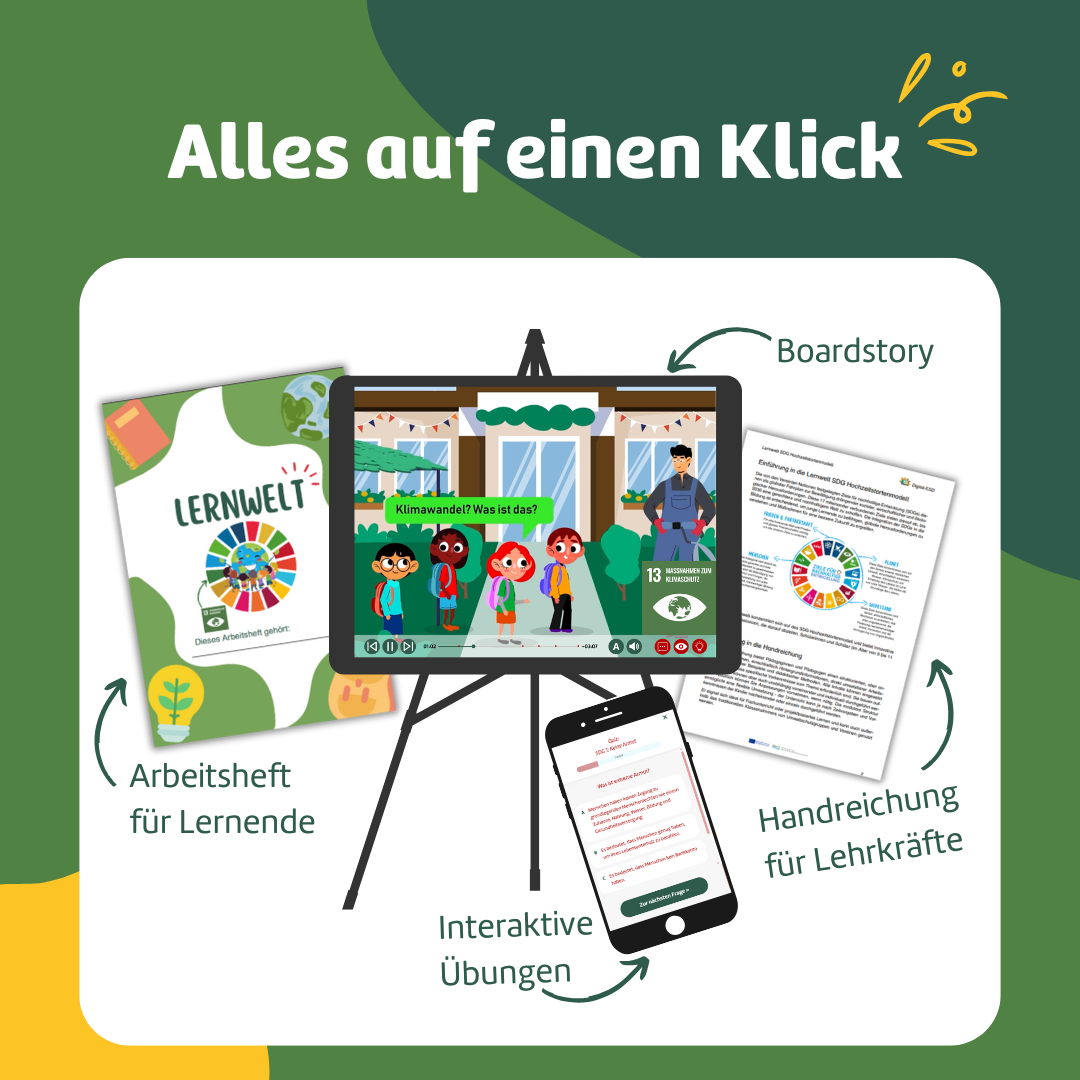
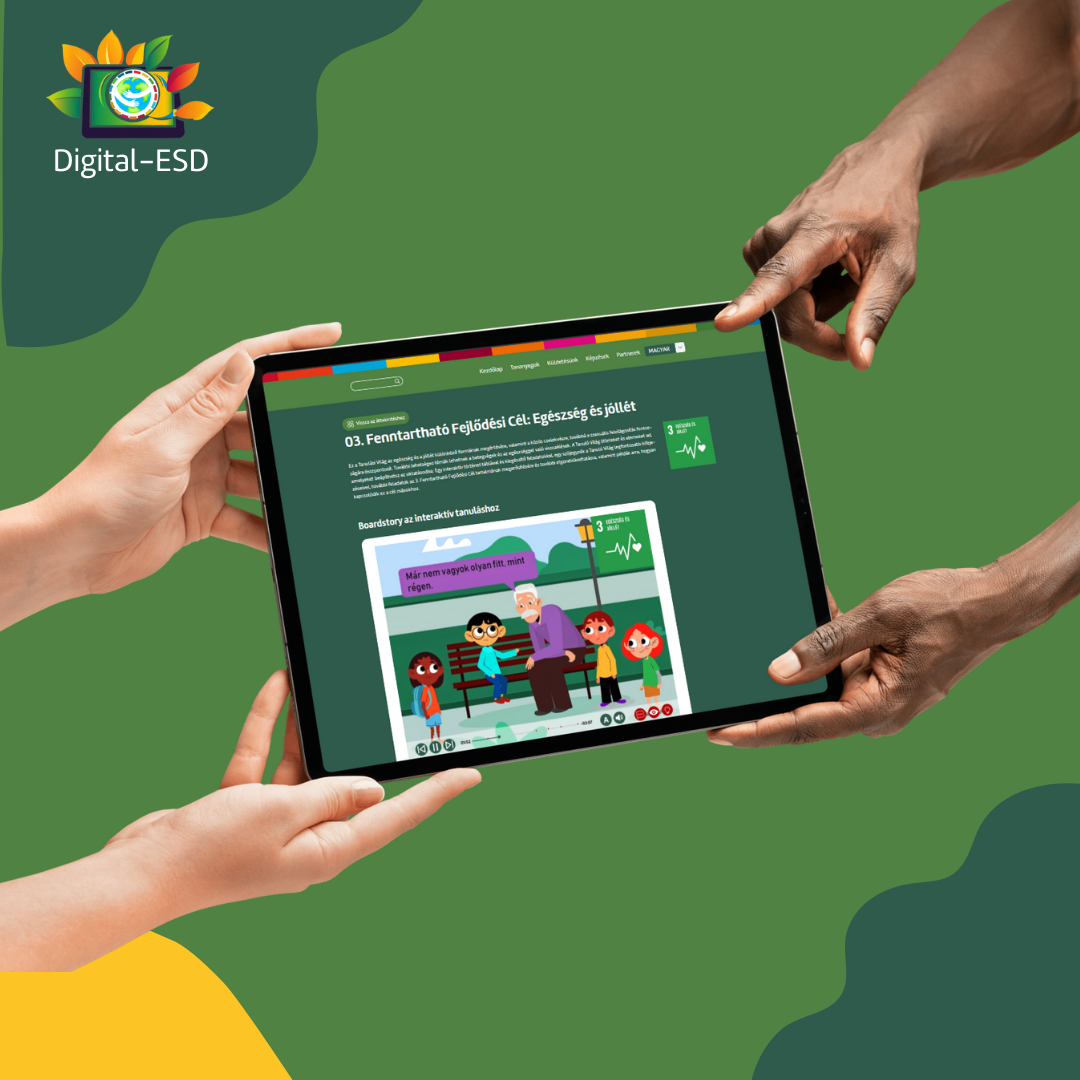
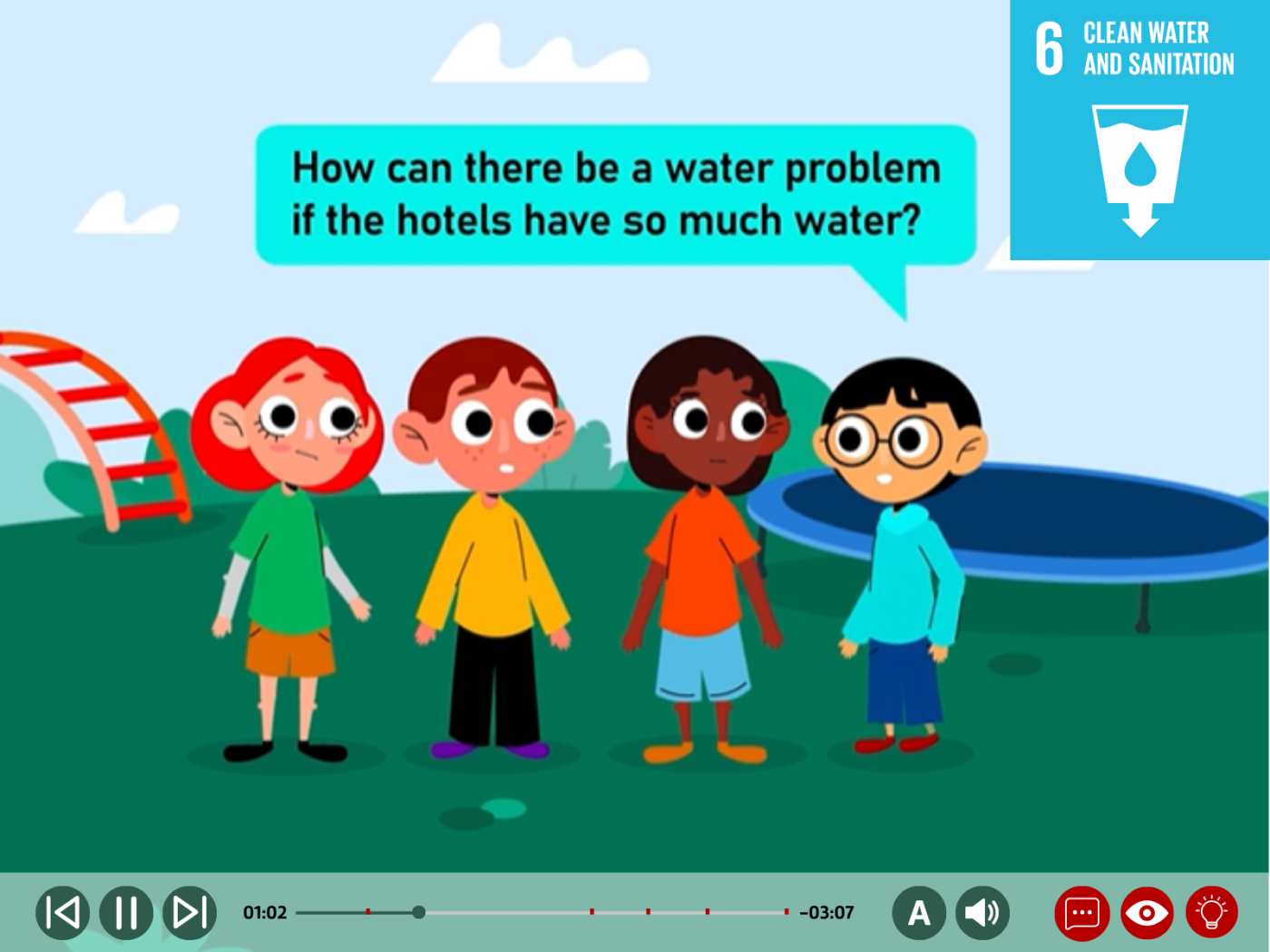
This includes two milestones: the creation of 19 board stories and the web development of the digital learning platform. The selection of topics for the board stories follows the criteria of the SDG framework from WP 3. The board stories are interactive, animated learning videos to enable pupils to acquire ESD skills in a motivating and modern way. They generate knowledge, insights and skills that form the basis for future-oriented action. For the purpose of quality management, a pilot group with 2 Hungarian schools consisting of 4 teachers is testing the beta production. The applicability of the interactive board stories to the needs of the target group and the alignment with the Hungarian curricula ensure that the overall objectives of the project are achieved.
WP 5: Creation of teaching materials and handouts for teachers
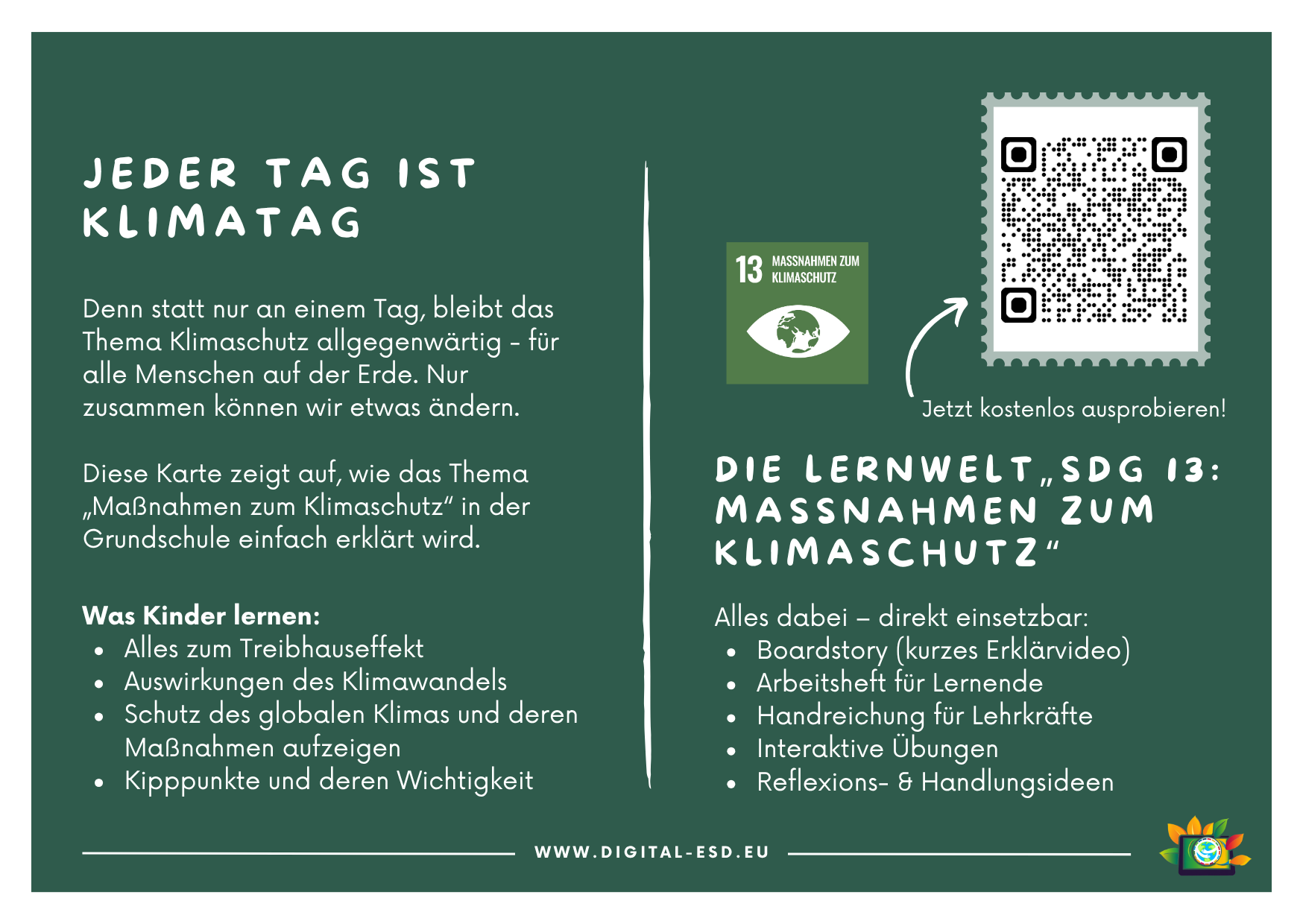
In work package 5, 19 handouts for teachers and a mix of educational materials are created, resulting in an overarching learning world for the Wedding Cake model, a learning world for each SDG and a learning world for the dilemmas. Learning materials in PDF form and as interactive exercises are created to match each board story in order to promote children’s knowledge and media skills in the best possible way. A holistic approach is achieved by providing a balanced learning experience that engages learners further with the topic. The learning material is structured according to the three competence areas “Recognize”, “Evaluate” and “Act”. The competencies targeted by ESD open up new perspectives for a value-oriented approach to technical and interdisciplinary teaching. With the help of the handouts for teachers, primary school teachers are enabled to deliver effective ESD. These learning environments are then tested by the pilot groups for their practical suitability and didactic added value.
WP 6: Rollout & communication
By disseminating the project results via the media, the partners’ networks and communication channels as well as European and national educational platforms, the direct and indirect target group of potential users is also reached. As all partners use their own communication channels, the project results are disseminated effectively.
Learning platform with 19 educational materials in German: https://digital-esd.eu/de
Learning platform with 19 educational materials in Hungarian https://digital-esd.eu/hu
Innovation and exemplary nature of the project
The project is the first time that all sustainability goals and their conflicting objectives and dilemmas as well as the “SDG Wedding Cake” model have been comprehensively prepared and made available digitally for Hungarian elementary school. The project results also meet the demand for a link between ESD and digital media education, which has not yet been implemented and integrated into lessons on this scale in Hungary. The cooperation between the three partners is effective. In particular, the involvement of the Hungarian partner enables Hungarian teachers to be involved in the development and production process of the digital learning worlds and the accompanying materials from the outset, thus creating a strong multiplier effect. The continuation of the learning platform is also guaranteed through the takeover by the Hungarian partner. By expanding the 17 Sustainable Development Goals to include a learning world on the “SDG Wedding Cake” model and incorporating dilemmas and conflicts, the project helps pupils to develop a comprehensive understanding of the complexity of the Sustainable Development Goals and understand that there are no simple answers to complex problems.
Special aspects of the project
Particularly noteworthy is the involvement of the target group of teachers and pupils in the development process of the materials, which underlines the participatory approach of the project. In addition to the provision of learning materials, a framework will also be made publicly available to support the integration of ESD into the curriculum outside of the project and to facilitate the development of materials relating to ESD and the SDGs.
Funding topic 1: Sustainability communication, education and evaluation
Project implementation:
- StoryDOCKS GmbH/Brand Onilo, Hamburg
- Hungarian Research Teachers’ Association (HRTA), Budapest, Hungary
- Independent Institute for Environmental Issues (UFU) e. V., Berlin
Place of activity: Hungary
Funding period: September 2023 to September 2026
Project costs: Total volume: 149,999 euros, funding from DBU: 74,998 euros
DBU-AZ: 38792/01
Status: 09.02.2026