Application potentials for biochar from organic waste in Albania with special consideration of water treatment (BAAWas)
Keywords: climate protection, sustainable agriculture, biochar, water treatment; valorization of organic residues; participation and knowledge transfer
Subject and objectives of the project
Albania is very clearly exposed to the effects of climate change, with the result that adaptation strategies for water resource management, climate-resistant irrigation and sustainable intensification of agriculture, including the corresponding infrastructure, are being pursued. Water pollution by pathogens and pollutants due to the discharge of untreated wastewater or substances from agriculture due to the increasing use of pesticides is likely, but has hardly been investigated to date.
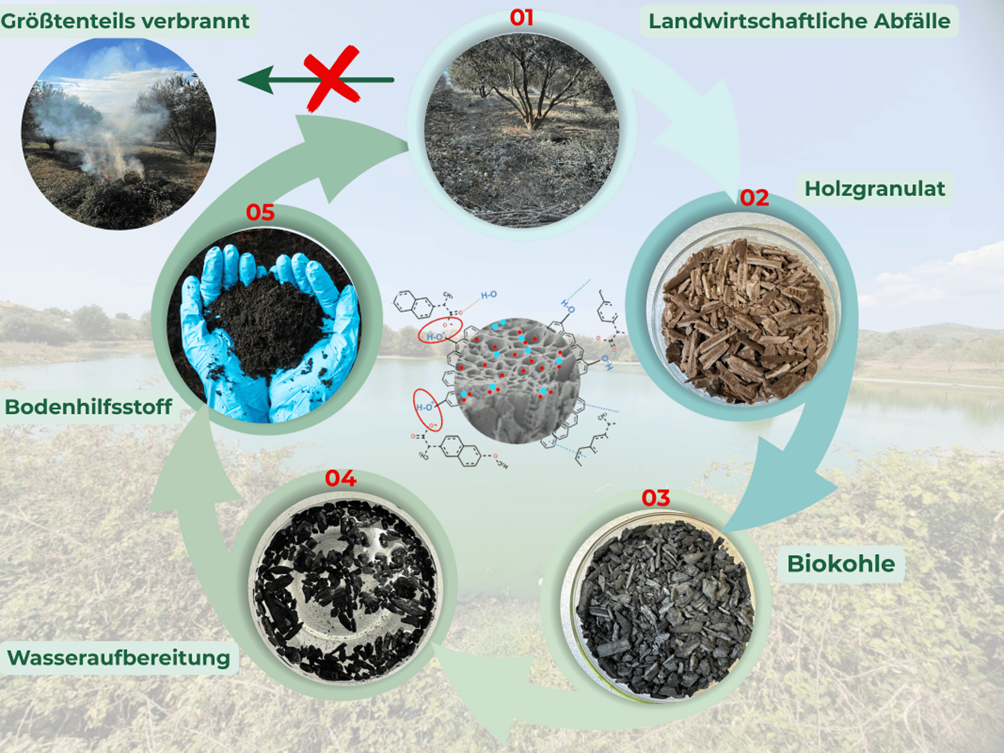
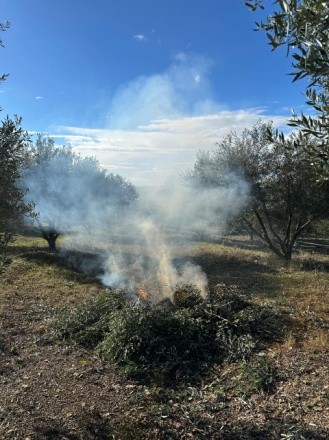
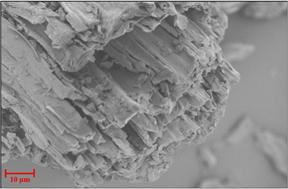
The BAAWas project focuses in particular on recording and improving the quality of irrigation water in Albania. In cooperation with the Albanian municipality of Belsh, an Albanian NGO, the Agricultural University of Tirana, the Technical University of Central Hesse and MESOCOSM GmbH, Justus Liebig University Giessen is coordinating the project, in which biochar, which is obtained from organic residues, is used in suitable filter systems for the sustainable purification of irrigation water in agriculture. Instead of incineration in the field, which has unfortunately been common up to now, these residues are valorized in line with the circular economy concept, while at the same time reducingCO2 emissions through pyrolysis. BAAWhat is thus intended to contribute to the further establishment of a circular economy, improved water treatment and the low-residue agricultural production of food in Albania: With the production of biochar and its use in agriculture to purify the irrigation water used, the pesticide load in soils and food is also reduced in the process. For this purpose, a pyrolysis reactor is being developed and tested at the THM, with which biochar can be produced and activated on the basis of different biomasses. This reactor is to be used at AUT in the future. By working directly with the municipality of Belsh and local farmers, the aim is to record the population’s perception of the circular economy and water pollution and to further raise awareness of the use of biochar for water purification. This participatory approach helps to overcome social and scientific challenges together and to take the first concrete steps towards practical applications in the field of biochar in Albania.
Innovation and exemplary nature of the project
The project will raise the capacities for the analysis of water and solid samples as well as activated biochar at the Agricultural University of Tirana to a new level and thus open up new potential for research, development, testing and teaching for students and in the further education of land users. The transdisciplinary cooperation of scientists with stakeholders from society and administration expands the framework and closes the gap between research and application. The approach pursued in BAAWas is transferable to large areas of irrigated agriculture in South-Eastern Europe and the Mediterranean. The prerequisites for this are (1) available, suitable organic waste, (2) increasing demand for irrigation water and supply of the same, (3) awareness in the agricultural population for sustainable food production, (4) political will to implement the technology.
Special aspects of the project
Specific to BAAWas is the transdisciplinary composition of the consortium, in which – in line with the complex task – representatives of various scientific disciplines (agricultural/environmental sciences, ecotoxicology, process engineering) and non-scientific areas (administration, society and industry) jointly develop innovative solutions for the sustainable use of organic residues with the aim of water treatment using biochar. Cooperation to implement sustainable structures takes place on an equal footing and strengthens local expertise.
The long-standing international cooperation between the partner institutions AUT and JLU also ensures a high level of intercultural competence in research and implementation. The Albanian scientist employed in the project is working on the analytics required to assess the existing environmental pollution and the performance of the biochar in an integrated doctoral project at both universities (AUT and JLU). Together with scientists from THM, a pyrolysis reactor is being developed for AUT, which can be used in academic training in Albania and enables the establishment of initial test filters in agricultural practice. BAAWas contributes to sustainable regional development in Albania, in particular by addressing the UN Sustainable Development Goals SDG 2 (Food Security), SDG 6 (Clean Water), SDG 12 (Sustainable Production) and SDG 15 (Life on Land).
Funding theme 9: Nature conservation and water protection
Project implementation:
- Justus Liebig University Giessen (JLU), Institute of Soil Science and Soil Conservation
- Agricultural University of Tirana (AUT), Department of Environment and Natural Resources
- Technische Hochschule Mittelhessen (THM), Department of Mechanical and Energy Engineering, Giessen
- MESOCOSM GmbH – Institute for Water Protection, Homberg
Associated partners:
- Administration of the municipality of Belsh (Mayor), Albania
- NGO National Center of Environmental Movement (NCEM), Tirana, Albania
Places of work: Albania, Germany
Funding period: February 2025 to February 2027
Project costs: total volume: 198,955 euros, funding from DBU: 168,930 euros
DBU-AZ: 39821
Status: 09.03.2026