A New Era in Wastewater Treatment
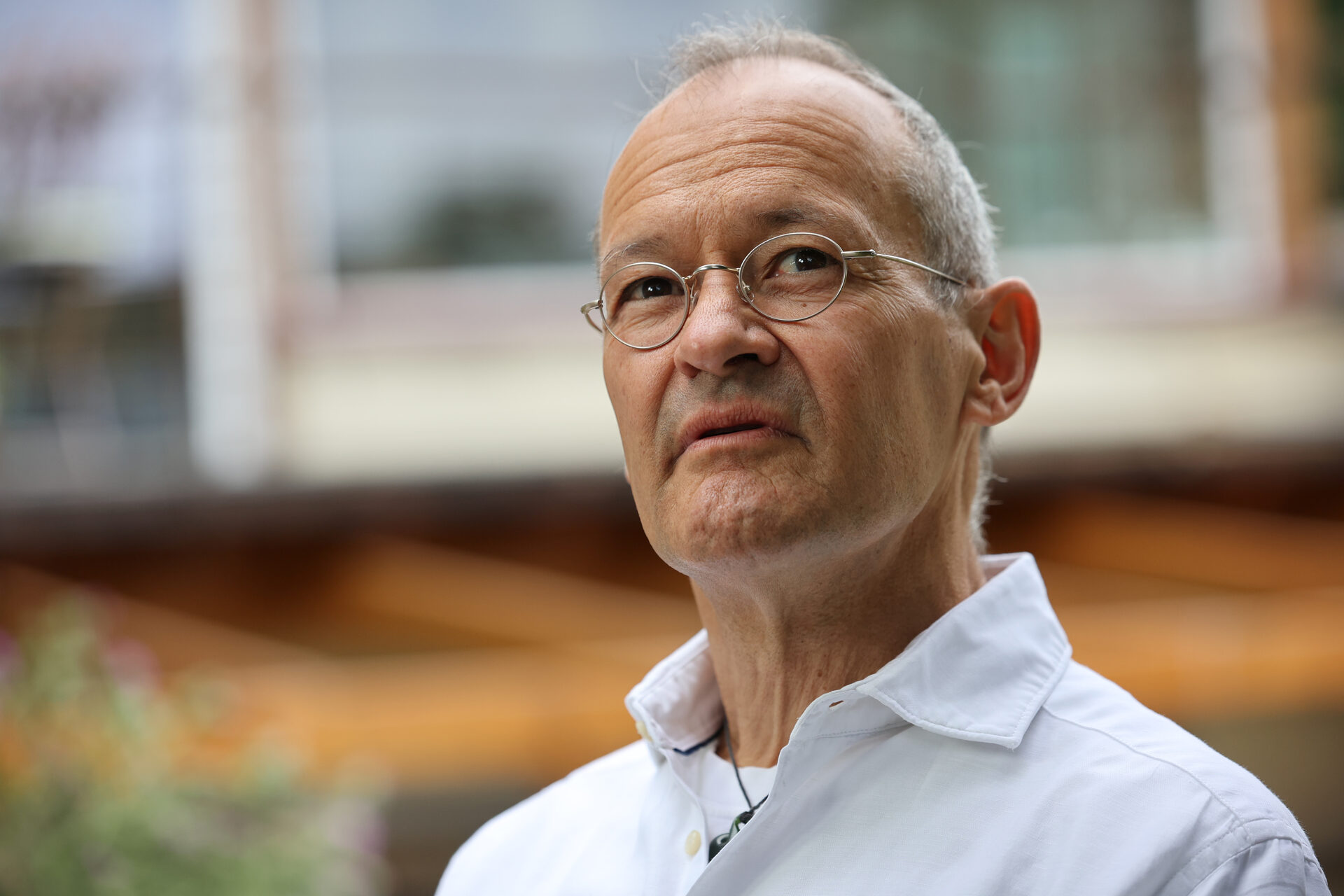
Osnabrück/Aachen. This year, the German Federal Environmental Foundation (Deutsche Bundesstiftung Umwelt, DBU) is awarding the German Environmental Prize to membrane filter engineer Dr. Klaus Vossenkaul, founder and CEO of Membion. “With perseverance and ingenuity, he has pioneered a technology that already meets tomorrow’s standards today—ushering in a new era of wastewater treatment at sewage treatment plants,” says DBU Secretary General Alexander Bonde. Vossenkaul shares one of Europe’s most highly endowed environmental awards, totaling 500,000 euros, with Hamburg-based environmental lawyer Dr. Roda Verheyen. The DBU will present the 2026 German Environmental Prize for the 34th time on October 25 at a ceremony in Aachen. The award will be presented by Federal President Frank-Walter Steinmeier.
European Union Urban Wastewater Directive: Wastewater Treatment Plants Facing Radical Change
Bonde speaks of “new standards for wastewater treatment: optimal water quality, minimal energy consumption, and maximum space savings. This makes wastewater treatment plants future-proof.” These plants in the European Union (EU)—including hundreds in Germany—are facing a radical transformation: To better protect water bodies from micropollutants, the EU Urban Wastewater Treatment Directive (Kommunale Abwasserrichtlinie, KARL), which took effect in 2025, must be implemented across the EU by the end of July 2027. It requires a highly efficient fourth treatment stage in addition to the three conventional mechanical-biological-chemical steps used to date. According to Bonde, Vossenkaul’s innovations make this technically and ecologically superior membrane technology cost-competitive with conventional wastewater treatment technology in both production and operation—now a bonus for many facilities that must retrofit due to KARL. “Vossenkaul’s membrane technology is a flexible modular system—and an elegant solution in the new KARL era, especially where space is limited,” said Bonde.
Hollow-fiber membrane filters: as thin as spaghetti, as hollow as macaroni, and 1.60 meters long
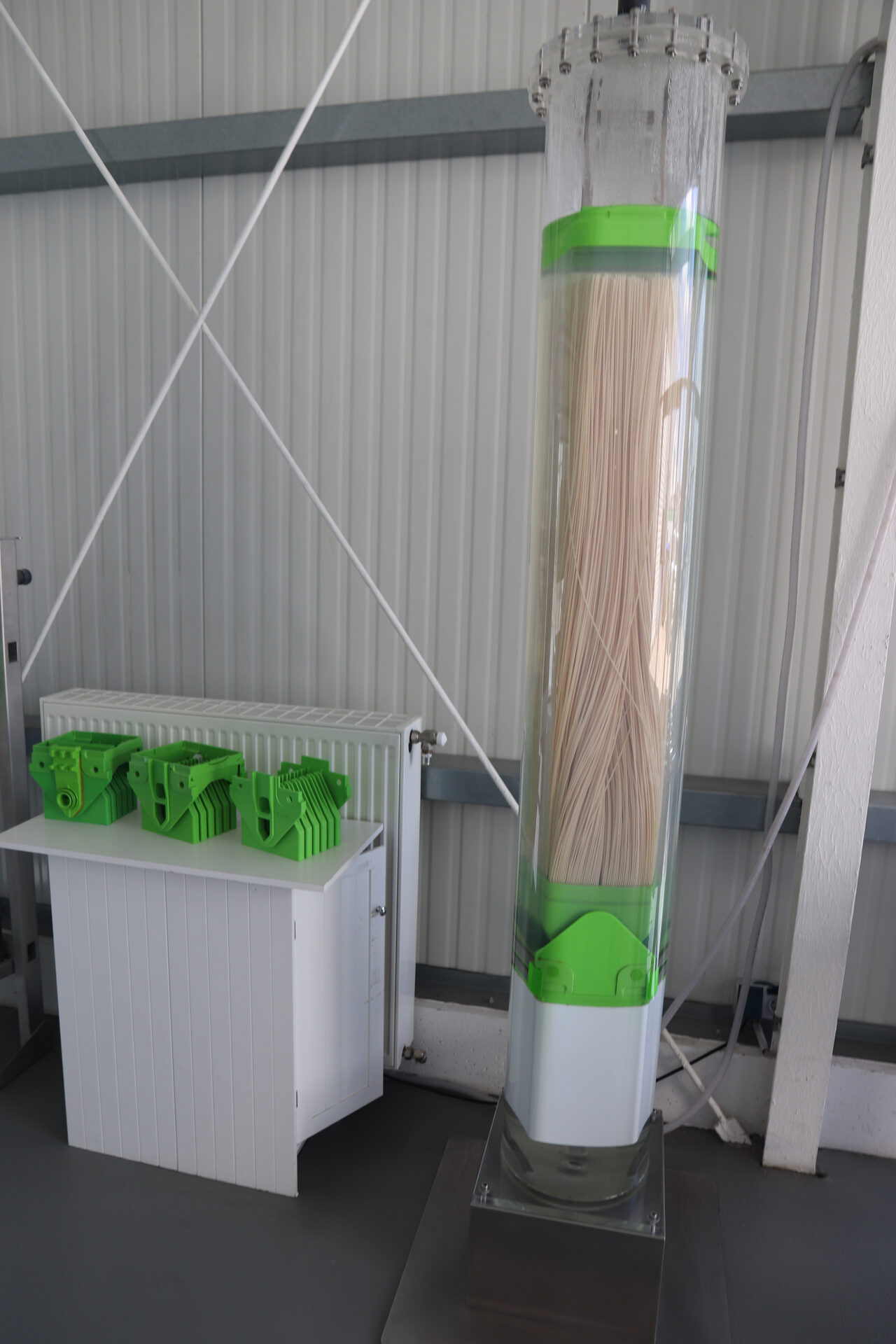
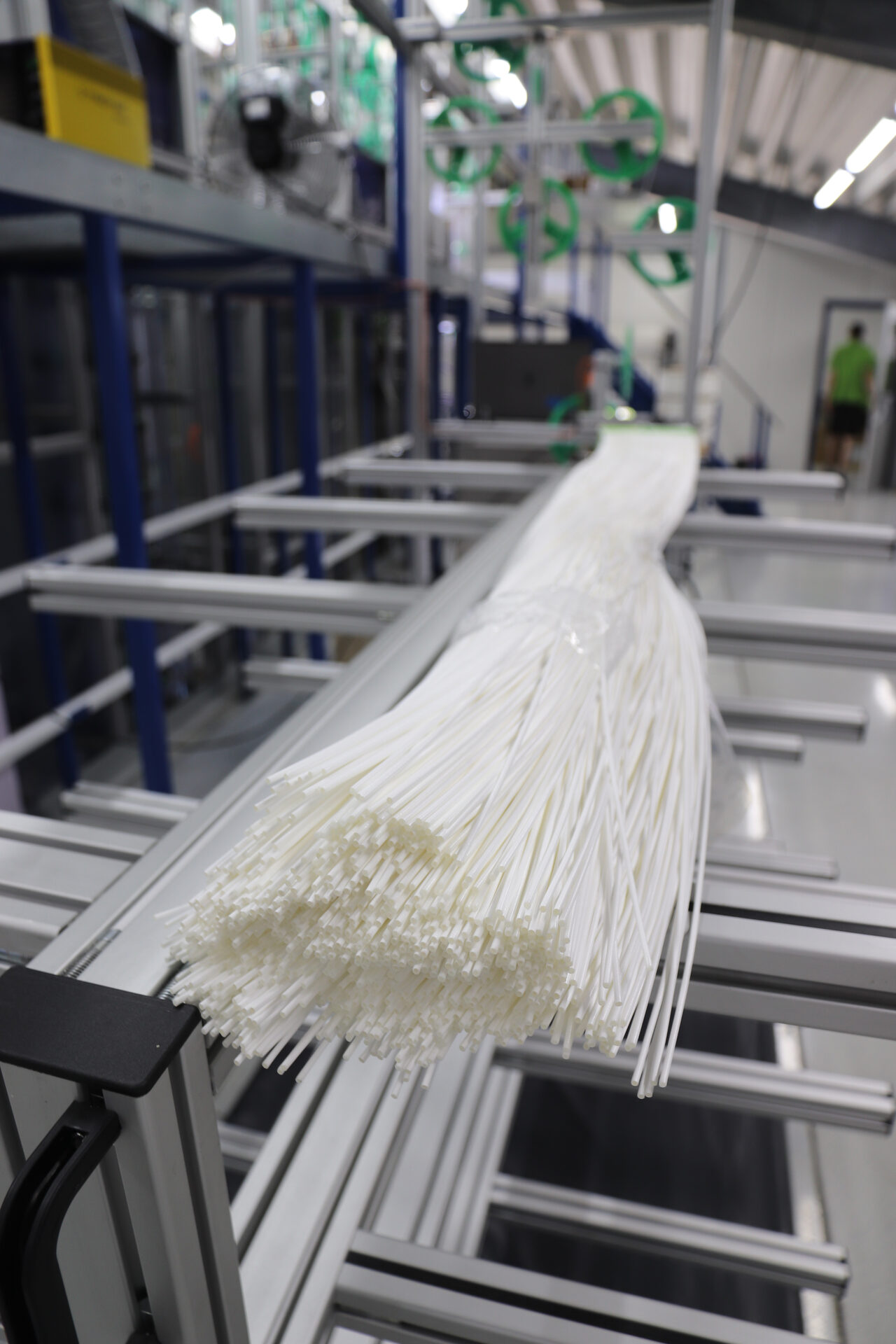
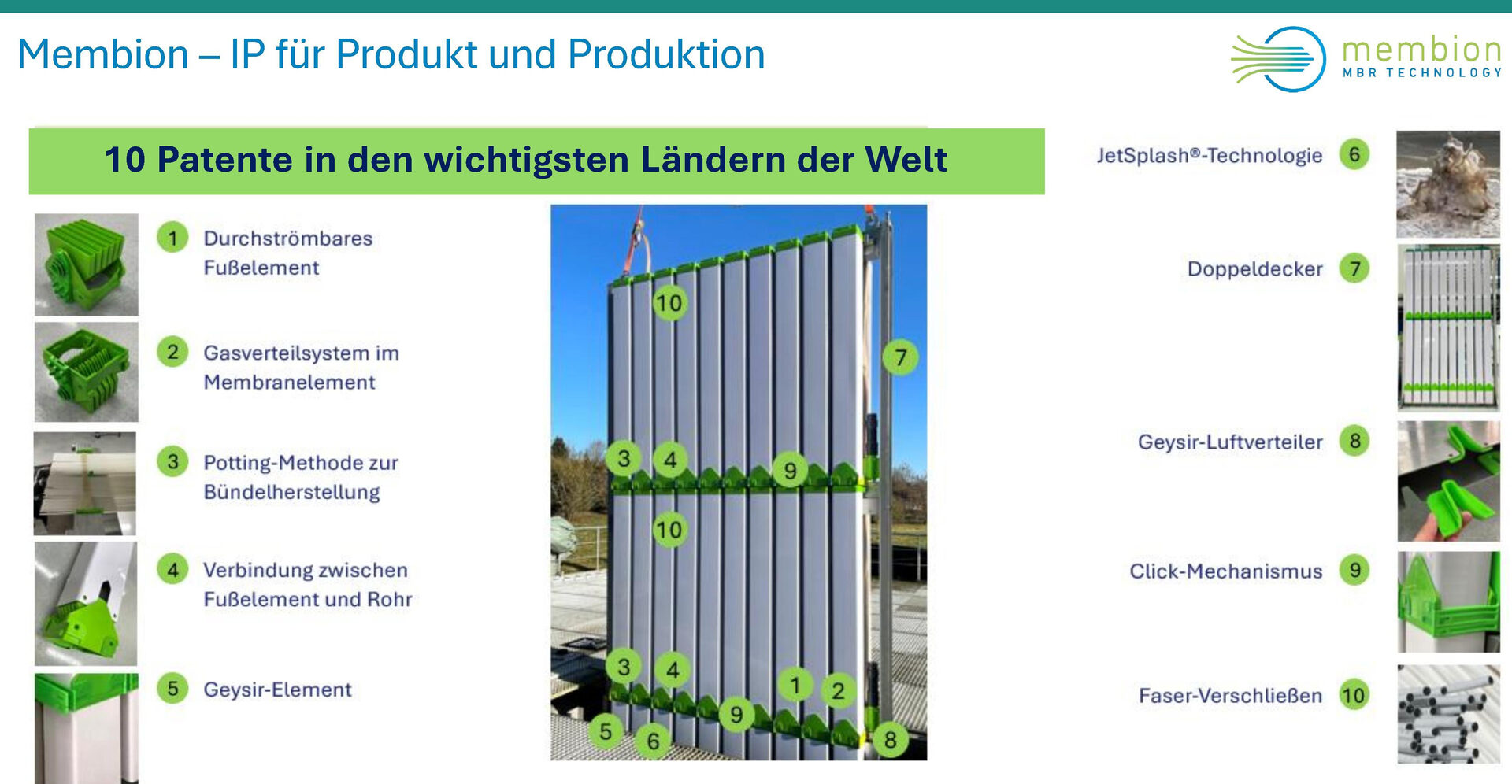
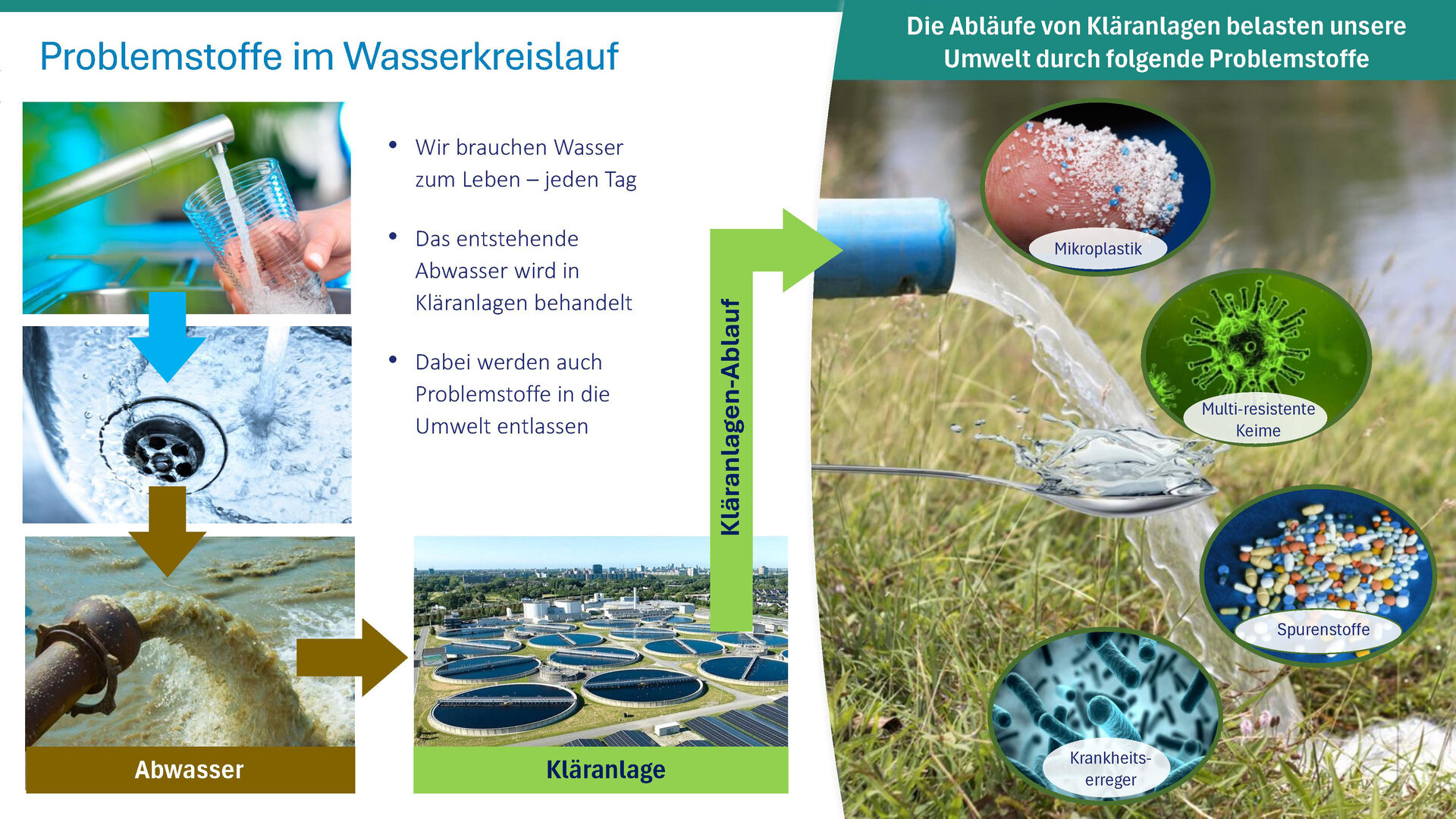
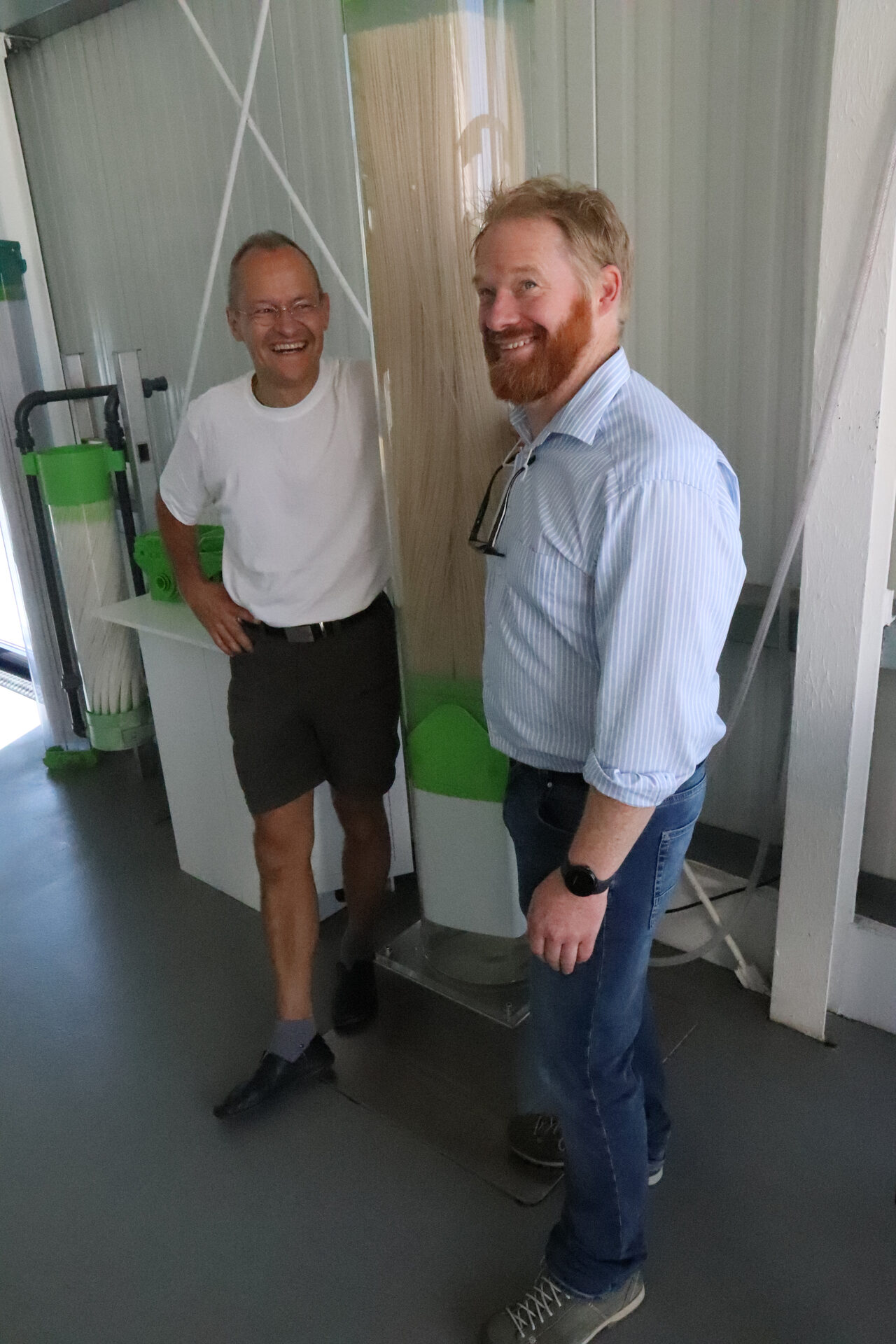
According to Bonde, Vossenkaul has demonstrated “remarkable courage” through his various startup ventures in membrane technology. What sets Membion apart: After launching the company in 2012, CEO Vossenkaul and his partner, process engineer Dirk Volmering, focused exclusively for years on further developing membrane bioreactor (MBR) technology. The result is hollow-fiber membrane filters: “Thin tubes that filter crystal-clear water from sewage sludge. They look like spaghetti, are hollow like macaroni, and are about 1.60 meters long,” says Vossenkaul. They’re made of four types of plastic and, most importantly, have pores so fine that the membranes filter problematic substances out of the wastewater—including microplastics, pathogens, and multidrug-resistant bacteria, as well as drug and cosmetic residues using activated carbon. These are just a few examples of pollutants that burden the sewer system and wastewater. They come from manufacturing, cooking, washing dishes, showering, and flushing toilets—in other words, everything that is disposed of down the drain. A new wastewater treatment system using sewage treatment plants is indispensable, according to Bonde. “It protects humanity’s most important resource. Without water, there is no ‘us.’” According to Bonde, this is the best form of water recycling and the foundation that ensures, among other things, that crystal-clear water reaches reservoirs—the basis for subsequently producing vital drinking water in several steps. Vossenkaul’s achievement is “of enormous significance,” says Bonde.
Sludge and Bacteria: A Staple of Wastewater Treatment Plants
Even before Vossenkaul’s ideas, MBR technology was already producing water quality that was many times better than that of conventional wastewater treatment plants. However, the high energy consumption required to flush the membranes—to prevent clogging by sludge—often deterred wastewater treatment plant operators from installing the system. Sludge and bacteria are a constant feature of wastewater treatment plants: Bacteria break down the constituents of the wastewater, making the water biologically clean. At the same time, they multiply, and the sludge grows along with them. Excess sludge is disposed of, while the rest remains in the treatment plant for the next cycle. Circular tanks, such as those found in conventional treatment plants, where sludge settles to the bottom and separates from the water, are no longer needed. Instead, membrane modules are submerged in the sludge, and the water—purified by bacteria—is extracted from the membranes, crystal clear. While it is not suitable for drinking, it can be used, for example, for agricultural irrigation. This conserves groundwater reserves, which are essential for drinking water treatment. The heat wave of 2026 demonstrated why this protection is becoming increasingly important.
Vossenkaul’s ideas will form the core of Germany’s largest membrane wastewater treatment plant in Wolfsburg
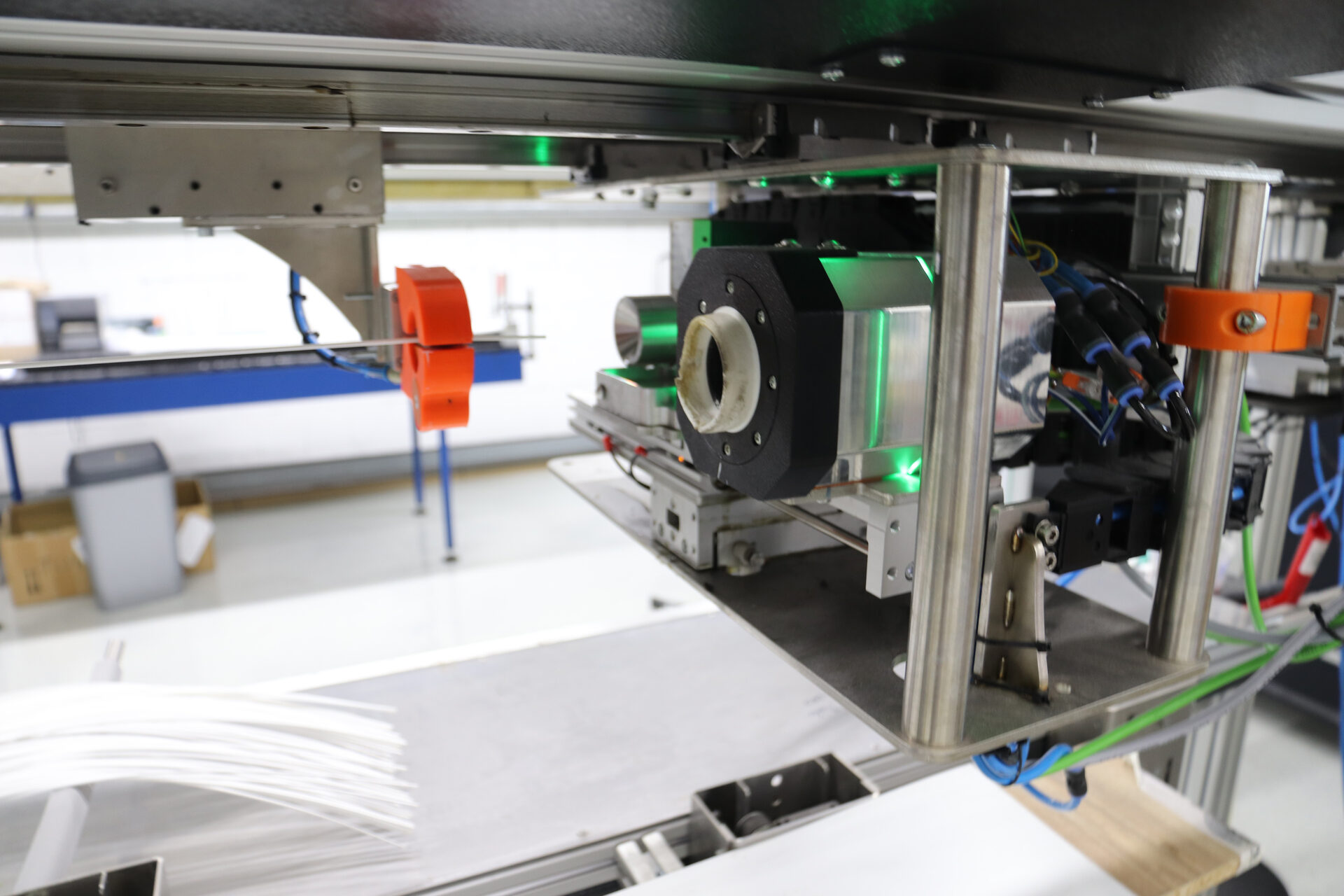
For nearly five years, a pilot wastewater treatment plant in the Eifel village of Konzen near Monschau—equipped with both conventional plate-module membrane filters and Membion technology—has been demonstrating what is possible: a reduction of more than 90 percent in energy consumption for membrane backwashing and a 75 percent reduction in space requirements. Vossenkaul: “The wastewater treatment plant operator stands to save a six-figure sum in electricity costs per year.” Membion technology is now used by Collini, Europe’s leading electroplating company, as well as by McCain, the world’s largest producer of French fries, for treating potato wastewater. And: It will be the centerpiece of Germany’s largest membrane wastewater treatment plant in Wolfsburg-Stahlberg, currently under construction: More than 1,600 “macaroni” membranes are anchored in a base element and float freely like seaweed in enclosed, man-sized housings submerged in the sludge. In Wolfsburg, 3,000 such base elements are in use. Vossenkaul’s ingenious solution: so-called “Geyser” elements clipped beneath the base element, from which pulses of air propel the sludge upward in a matter of seconds—thereby keeping the membrane pores clean for a long service life. Vossenkaul calls this “JetSplash” (water splash)—one of his 28 patents in total. The father of three was born in Roetgen in 1965 and earned his doctorate at the Institute of Process Engineering at RWTH Aachen University. Music and exercising almost every morning are his passions, including the a cappella quartet “Lovely Mr Singing Club”. His motto: “Believe in what you do.”
Up to 80 percent of the world’s 360 billion cubic meters of wastewater is discharged untreated into the environment
Nationwide, about 130 liters of water are used per person per day in Germany—and as much as 7,000 liters when imported food, clothing, and other goods are taken into account. This results in wastewater that needs to be treated—in Germany, by approximately 8,700 public wastewater treatment plants, totaling 8.3 billion cubic meters each year. Worldwide, the situation is dire: Of the approximately 360 billion cubic meters of wastewater globally—four times the volume of Lake Geneva—up to 80 percent flows untreated into the environment. Bonde: “There is a huge need for action on wastewater.” Highly efficient treatment of this wastewater is increasingly becoming a lifeline for both people and the environment: Only about 0.3 percent of the world’s total water volume—roughly 120,000 cubic kilometers out of a global total of 1.4 billion cubic kilometers—is freshwater available for human use. The rest is largely the saltwater of the oceans or, in the form of freshwater, locked up in the ice of the Arctic and Antarctic, among other places.